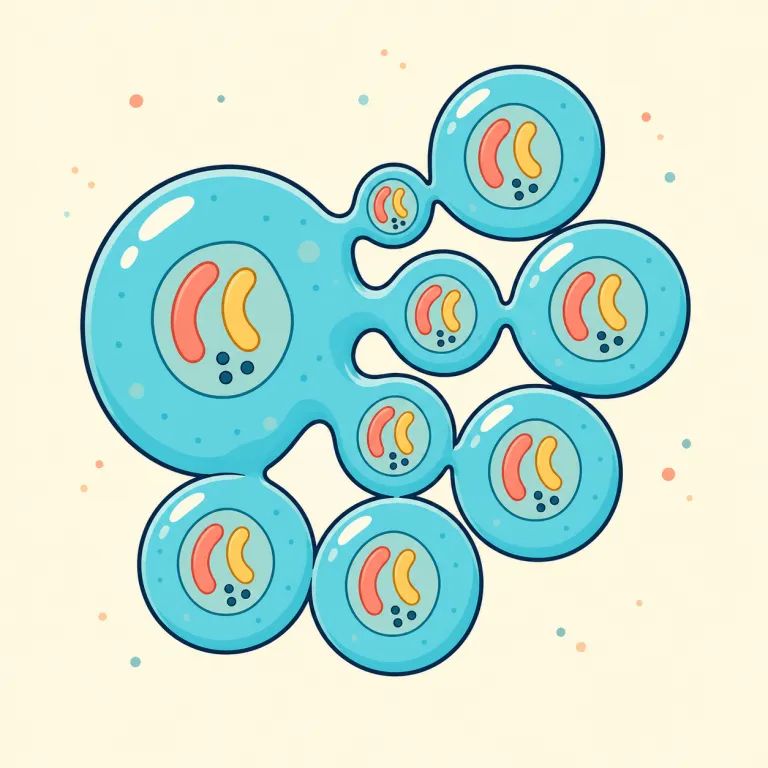
クローン性の
解説 Definition
生物学で、ある細胞や個体が一つの親や元の細胞から増え、遺伝的にほぼ同一である状態や性質を表す形容詞。植物の無性生殖、微生物の増殖、腫瘍内の細胞集団の研究などで、由来が同じであることを示す際に用いられる。
Clonal means relating to a clone or to organisms, cells, or plants that come from one original source and are genetically identical. It is commonly used in biology, medicine, and agriculture.
覚え方のコツ Memory Tip
clone を知っていれば、そのまま形容詞化した語だと押さえると早いです。-al は「〜に関する」を作る語尾で、clonal は「クローン由来の・同じ元から増えた」。生物で "似ている" ではなく、"一つの親細胞・親個体から広がったため遺伝的にほぼ同じ" に焦点があります。clonal expansion、clonal population、monoclonal とセットで覚えると定着しやすく、つづりが似た colonial との取り違えにも注意できます。
Build it from `clone` plus the adjective ending `-al`. That gives the idea of something connected to clones or coming from one original source. It often appears in science phrases like `clonal expansion`, and it helps to contrast it with similar-looking `colonial` so you do not mix them up.
例文
The researchers studied the clonal expansion of cells in the tumor sample.
研究者たちは、腫瘍標本における細胞のクローン性増殖を調べた。
Clonal propagation allows farmers to produce genetically identical plants from a single parent.
クローン増殖により、農家は一つの親株から遺伝的に同一の植物を育てられる。
The aspen grove is actually a clonal colony, with all trees sharing the same root system.
そのアスペンの林は実はクローン性の群落で、すべての木が同じ根系を共有している。
clonal の類義語・関連語
派生語
紛らわしい語
clonal の語源・成り立ち Etymology
clonal のもとになる clone は、ギリシャ語 klon「小枝・挿し木」にさかのぼり、-al が付いて「クローンの性質をもつ」となりました。もともと植物を枝からそっくり増やす発想なので、「遺伝的に同一」という意味が腑に落ちます。関連語は clone, monoclonal。
Clonal comes from clone with the adjective ending -al. Clone comes ultimately from Greek klon, meaning "twig" or "small branch," especially one used for grafting or planting. Because a plant grown from a cutting is genetically the same as the original, the word developed the idea of exact biological copying; compare monoclonal.
同じレベルの語彙をもっと
外部辞書で調べる
この英単語をクイズで覚えよう