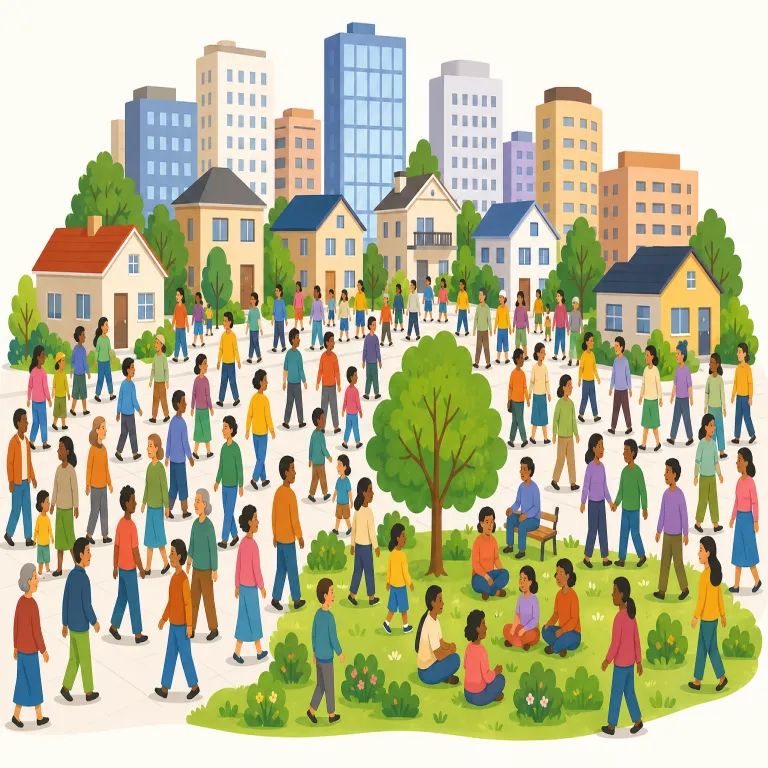
population
population は英検準2級・TOEIC 600レベルの英単語で、「人口」という意味があります。発音記号は /ˌpɑːpjəˈleɪʃən/ です。
人口
解説 Definition
人口とは、ある地域や国に住んでいる人の総数のことです。人口は出生率、死亡率、移住などの要因によって変化します。人口データは政策立案や都市計画に重要な役割を果たします。
The population is the number of people who live in a country, city, or other area. It is often used in geography, government, and social studies to talk about how large a group of people is.
覚え方のコツ Memory Tip
populate(人を住まわせる、満たす)を知っていると、population は「人が住んでいる状態」から「その地域の総人数」とつながる。-tion は action, nation などと同じ名詞化の形。city population, world population, population growth, population density のように地域名や増減・密度とよく結びつく。people が個々の人々を指しやすいのに対し、population は統計や社会全体をまとめて見る語だと押さえると定着しやすい。
Think of the verb `populate`: if you populate a place, you fill it with people. Then `population` is the noun form, like `nation` or `action`. Remember common pairs such as `city population`, `world population`, and `population growth`, which often appear in statistics and social topics.
例文
The population is very small.
人口はとても少ないです。
This city has a large population.
この市は人口が多いです。
The population goes up each year.
人口は毎年増えます。
えいたんごクイズでの正答率
この語をはじめて出題された 46人 のうち 40人 が正解しました(87%)。
えいたんごクイズの回答から集計した独自データです。1人につき最初に出題されたときの1回だけを数えており、復習や2回目以降の回答、「わからない」と時間切れは含みません。 集計時点は 2026年9月19日 です。
population の類義語・関連語
population の語源・成り立ち Etymology
語源はラテン語populus「人々」で、popul-「民衆」+ -ation「状態・結果」と捉えられます。populationが単なる人数でなく「人で満たされている状態」を含むのはこのためで、popularやpopulaceにも同じ根があります。
Population comes from Latin populus, meaning "people," and later from words like populatio and populationem. The root popul- is also seen in English words like popular and populace. The idea developed from simply "people" to the state or result of a place being filled with people.
同じレベルの語彙をもっと
英検準2級の一覧へ →外部辞書で調べる
この英単語をクイズで覚えよう