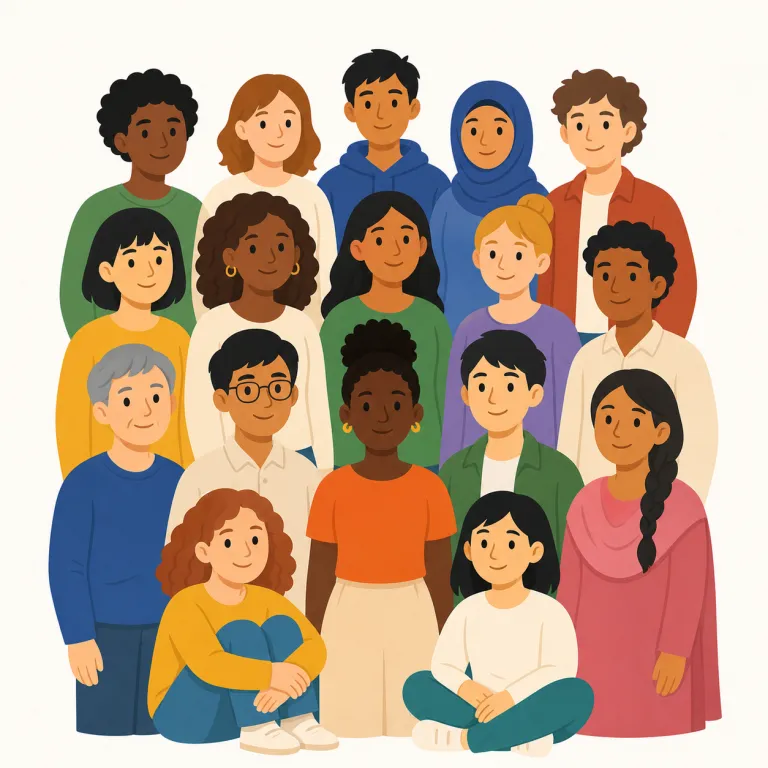
people
people は英検4級レベルの英単語で、「人々、民族」という意味があります。発音記号は /ˈpiːpəl/ です。
人々、民族
解説 Definition
複数の人をまとめて指す基本的な意味のほか、特定の地域・国・文化・民族に属する人々という集合的な意味でも使われる名詞です。文脈によって単なる「人々」にも、「先住民族」「国民」のような社会的・文化的集団にもなります。
People means human beings in general, or a group of persons. It is used very often in daily life, news, and social topics. In some contexts, it can also mean the members of a nation, culture, or community.
覚え方のコツ Memory Tip
まず person の複数形として覚えるのが基本。one person, two people と数えるので、persons はかなり限定的で、日常会話ではほぼ people。many people, young people のように最も広く使えます。さらに the people of Japan なら「日本の人々・国民」、indigenous peoples なら「複数の民族・先住民族」と、単なる複数より大きな集団を表せる。文脈で「ただの人数」か「共同体」かを見分けると定着しやすい。
The key memory link is person -> people, because this is the usual plural in everyday English. Learn it in a simple counting pattern: one person, two people. Also notice that people can mean a whole group or community, as in the people of a country.
例文
Many people are in the park.
多くの人々が公園にいます。
People help each other.
人々は助け合います。
Five people sit at the table.
5人がテーブルに座っています。
people の類義語・関連語
people の語源・成り立ち Etymology
people は古フランス語 pople を経て、ラテン語 populus「民・人民」にさかのぼる。語幹 popul- は「人々の集まり」を表し、popular や population にも残るので、単なる複数の人でなく「共同体としての人々」と感じると意味がつながる。
People came into English through Old French pople, from Latin populus, meaning "a people" or "the population." The root referred to people seen as a body or community, not just separate individuals. That larger social sense stayed strong as the word developed in English. Related words include popular and population.
同じレベルの英単語をもっと
英検4級の一覧へ →外部辞書で調べる
この単語を英単語クイズで覚えよう