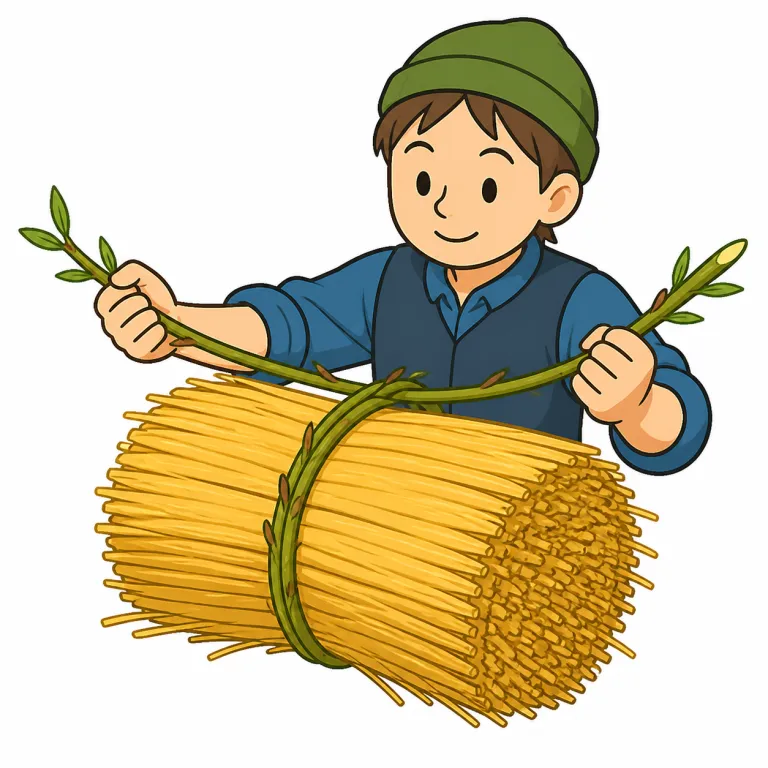
柔らかい枝
解説 Definition
柔らかい枝。柳などの柔軟な小枝で、物を束ねたり結んだりするために使われます。
A withe is a flexible branch, twig, or thin stem, especially one used for tying things together. It is an old or specialized word often seen in traditional crafts, farming, or historical writing. The idea is usually of something natural, bendable, and strong enough to bind.
覚え方のコツ Memory Tip
withe は日常語では珍しいので、単独で丸暗記するより「細くてしなる枝を、ひも代わりに使う名詞」という場面で覚えると残りやすいです。willow(柳)や withy と並べると、柔らかく曲がる小枝のイメージが固まります。twig や branch も枝ですが、withe は『束ねる・結ぶのに使えるほど柔軟』という点が大事。つづりは with に e が付いた形でも、前置詞 with とは別語なので混同注意。
This is a rare word, so remember the image, not just the spelling. A `withe` is a thin, flexible branch that can bend enough to tie or bind things. Think of a soft willow branch used like a natural cord.
例文
She wove a withe around the bundle to keep it tight.
彼女は束をしっかり保つために柔らかい枝を巻いた。
Farmers used a strong withe to secure the hay.
農夫たちは干し草を固定するために丈夫な柔らかい枝を使った。
The guide showed us how to bend a withe without breaking it.
案内人は柔らかい枝を折らずに曲げる方法を教えてくれた。
withe の類義語・関連語
紛らわしい語
withe の語源・成り立ち Etymology
withe は古英語 wiþe「しなやかな枝・縛るひも」に由来する古いゲルマン系語です。withy も同根で、曲げても折れにくい枝をそのまま結束材にしたため、『柔らかい枝』と『束ねるもの』が一語で重なっているのが面白い語です。
Withe is an old Germanic word that comes from Old English withe, meaning a flexible branch or binding strip. It referred to something bendable enough to tie or fasten with. Because such branches were used as natural bindings, the ideas of "supple twig" and "thing for tying" stayed together in the word. A related word is withy.
同じレベルの語彙をもっと
外部辞書で調べる
この英単語をクイズで覚えよう