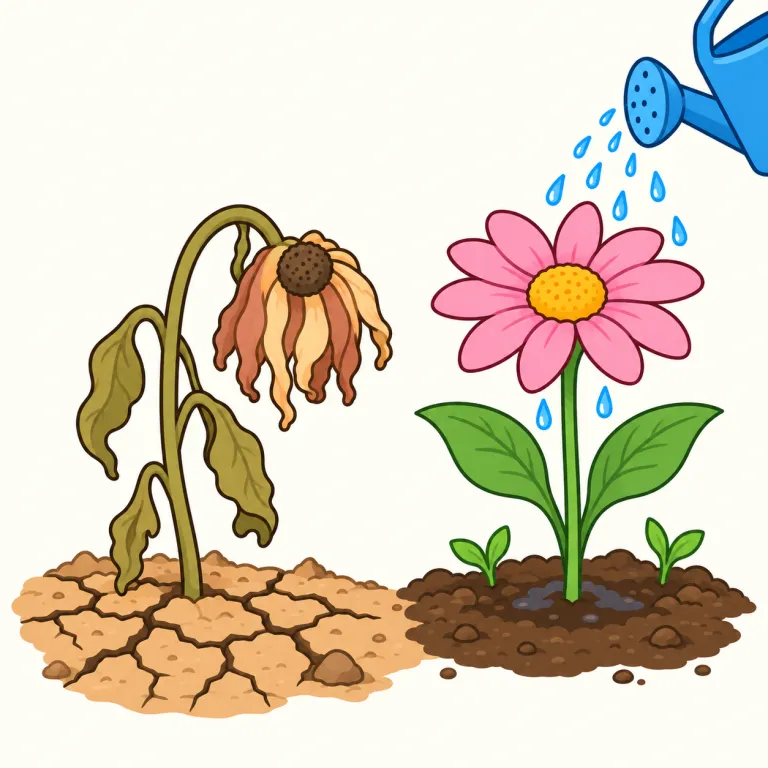
枯れる
解説 Definition
withers は wither(枯れる、しおれる)の三人称単数現在形です。植物が水分や元気を失って弱る様子を表すときによく使われます。
Withers is the third-person singular present form of wither. It describes a plant, flower, or similar living thing losing moisture, freshness, strength, or vitality, often because of insufficient water, excessive heat, disease, or age.
覚え方のコツ Memory Tip
原形 wither「しおれる・枯れる」に三人称単数現在の -s が付いた形で、語末は /z/ と発音します。主語が the flower や a young plant のような単数なら withers。wither without water/in strong heat と、植物が水分や活力を失う条件を一緒に覚えましょう。
Withers is the third-person singular present form of wither, made by adding -s, which is pronounced /z/ here. Use it with a singular subject: the flower withers, a young plant withers, or this herb withers. Picture a plant gradually losing water, firmness, and vitality in strong heat or direct sun. The verb suggests a process rather than an instant event. It can also be used figuratively for hopes or influence, but the examples here focus specifically on plants becoming dry, weak, and wilted.
例文
The flower withers without enough water.
その花は十分な水がないと枯れます。
A young plant quickly withers in strong heat.
若い植物は強い暑さの中ですぐにしおれます。
This herb withers if it is left in direct sun all day.
このハーブは一日中直射日光に当てておくと枯れてしまいます。
withers の類義語・関連語
withers の語源・成り立ち Etymology
古英語の「weder(天候)」に動詞接尾辞「-ian」が付き、もとは「悪天候で弱る」意味でした。風雨にさらされ植物がしおれる様子から、現在「枯れる」の意味に定着しています。同語源の「weather(天気)」と合わせると、自然と結びついたイメージが掴みやすいです。
Wither has been used in English since the Middle English period for becoming dry, shriveled, or faded. Its deeper origin is uncertain, and a direct derivation from weather is not firmly established, although exposure to harsh weather naturally provides a useful semantic association. Withers is the regular third-person singular present form, created by adding -s to the base verb wither; its final sound is /z/.
同じレベルの語彙をもっと
外部辞書で調べる
この英単語をクイズで覚えよう