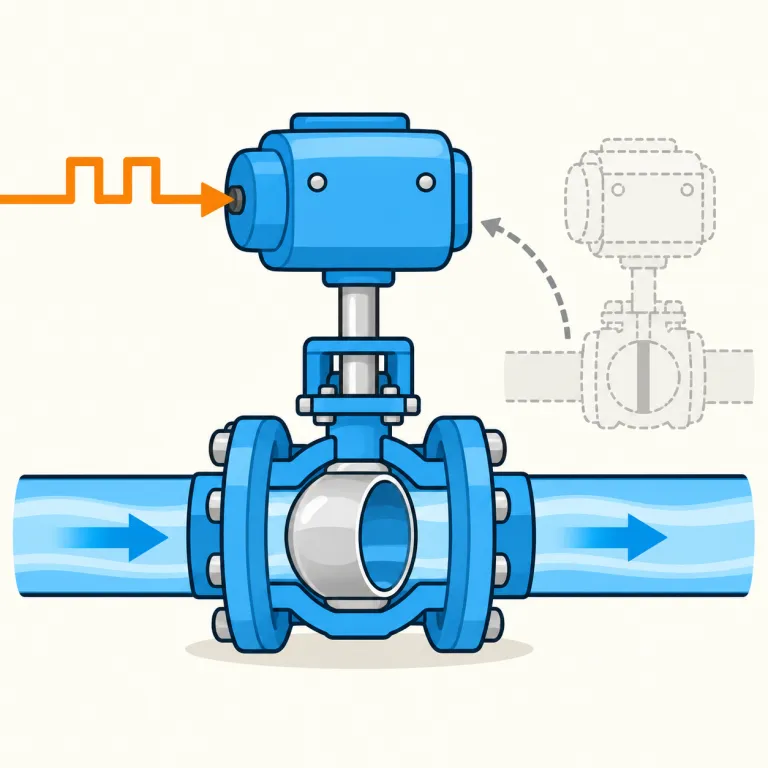
作動した
解説 Definition
actuated は actuate(作動させる、動かす)の過去形・過去分詞で、形容詞としては「作動した」「駆動された」という意味です。機械や装置が何らかの力や信号で動いた状態を表す、やや専門的な語です。
Actuated describes a mechanical part or device that has been caused to move or operate by a force, signal, or control mechanism. It is the past participle of actuate and is often used adjectivally in technical descriptions.
覚え方のコツ Memory Tip
原形 actuate「作動させる」の過去形・過去分詞で、語末の e を落として -ed を付けた actuated です。発音は /ˈæktʃueɪtɪd/ で、-ated の末尾は /ɪd/ になります。信号や力が装置を実際に動かした場面を思い浮かべ、actuated valve や actuated arm のような機械分野の組み合わせで覚えます。
Start with actuate, “to cause a mechanism to move or operate.” To form the past tense or past participle, drop the final e and add -ed: actuate becomes actuated. The ending is pronounced /ɪd/ because the base ends in /t/. Connect the act- element with action, then picture an electrical signal producing physical action in a valve or robotic arm. Technical combinations such as actuated valve, actuated arm, and pneumatically actuated mechanism reinforce the intended sense. Unlike activated, actuated specifically emphasizes caused movement or mechanical operation.
例文
The actuated valve opened within two seconds.
作動したバルブは2秒以内に開きました。
An actuated arm moved the part onto the belt.
作動したアームが部品をベルトの上に移しました。
The engineer tested whether the actuated switch responded correctly.
技術者は作動したスイッチが正しく反応するかをテストしました。
actuated の類義語・関連語
actuated の語源・成り立ち Etymology
ラテン語 actus(行為)から派生した actuate(作動させる)の過去分詞形。語根 ag-/act-(動かす・行う)に由来し、接尾辞 -ate が動詞化する。関連語:action(行動)、activate(活性化する)。「力で動かされた」が原義。
Actuated is the past tense and past participle of actuate. Actuate entered English through Medieval Latin actuare, based on Latin actus, “a doing, action, or movement,” from agere, “to do or drive.” The verb-forming ending -ate is followed here by the regular past-participle ending -ed. Its mechanical sense developed naturally from the idea of putting something into action or causing it to move.
同じレベルの語彙をもっと
外部辞書で調べる
この英単語をクイズで覚えよう