無水
解説 Definition
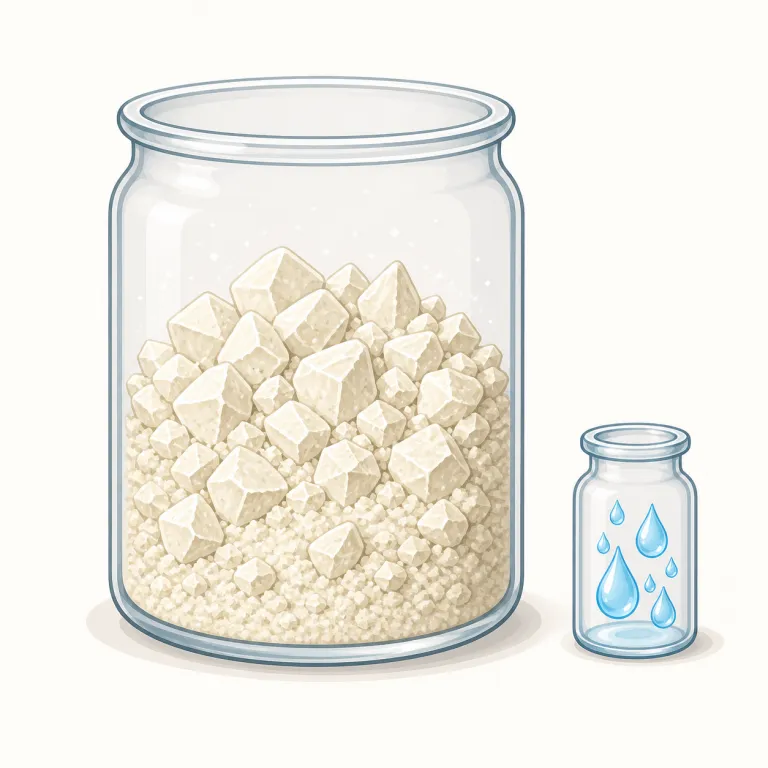
化学で、水分を含まない状態。無水物に関する。
Anhydrous means containing no water. It is often used in chemistry for substances that have had all water removed or naturally have none in their structure. This word is mostly technical and common in scientific writing.
覚え方のコツ Memory Tip
dehydrate(脱水する)や hydrated(潤った)を知っていると覚えやすい語。anhydrous は日常的な「乾いている」ではなく、化学で“水分が入っていない”ときの専門語で、an anhydrous solvent, anhydrous ethanol の形でよく出る。dry は単に乾燥、anhydrous は成分として水を含まない、という違いで押さえると混同しにくい。hydrate 系の語を見たらまず水分の有無を考えるのがコツ。
Look for the `hydr-` part, the same idea as in `hydrate`, `dehydrate`, and `hydration`. That root points to water, and `an-` adds the idea of `without`. In chemistry, remember it through pairs like `dry` versus `anhydrous`: not just dry on the surface, but containing no water.
例文
Anhydrous ethanol is used in laboratories where even trace amounts of water would interfere.
無水エタノールは、微量の水分さえ実験に支障をきたすような研究室で使用される。
The chemical must be stored under anhydrous conditions to prevent degradation.
その化学物質は劣化を防ぐために無水条件で保管しなければならない。
Anhydrous ammonia is widely used as a fertilizer in agriculture.
無水アンモニアは農業で肥料として広く使用されている。
anhydrous の類義語・関連語
類義語
anhydrous の語源・成り立ち Etymology
anhydrous はギリシャ語由来で、an-「ない」+ hydor「水」+ -ous「…性の」から成ります。文字どおり“水を持たない”で、hydrogen や dehydrate にも同じ hydr- が見え、無水という意味が腑に落ちます。
Anhydrous comes from Greek parts: an- "without" and hydor "water," with the adjective ending -ous. Its literal sense is "without water," and that meaning stayed very close in scientific English. The same hydr- root appears in words like hydrate, dehydrate, and hydrogen.
同じレベルの語彙をもっと
外部辞書で調べる
この英単語をクイズで覚えよう