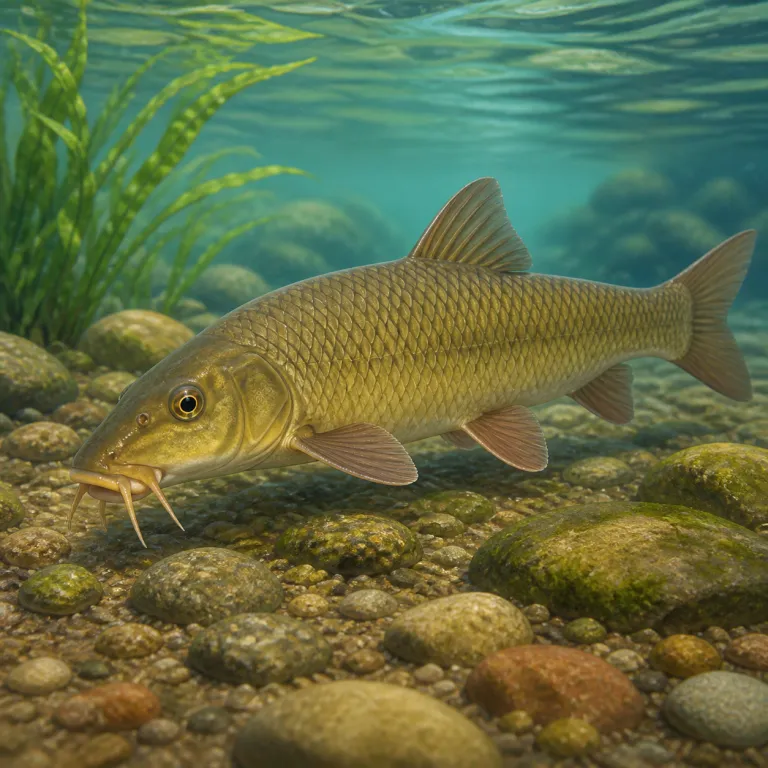
口ひげ状の感覚器官
noun 名詞魚の口やあごの周りに生える、ひげ状の細長い感覚器官を指す。餌や周囲を探る働きをもち、a pair of barbels のように可算名詞で使われる。魚そのものを指す barbel とは区別される。
コイ科に属する淡水魚の一種。口元にひげ状の感覚器官を持つ。
Barbel is a type of freshwater fish in the carp family. It is known for the small whisker-like parts near its mouth and is often found in rivers.
barbel は細かい定義より、まず「口ひげが目立つ川魚」という見た目で固定すると残りやすい。salmon や trout と同じく魚の種類名なので、一般語に広げず“図鑑・釣りで見る固有の魚名”として覚えるのがコツ。beard を知っていれば、ひげのある魚という連想が効く。catfish もひげの印象が強いが、barbel はコイ科の淡水魚という点をセットで押さえると混同しにくい。
Treat `barbel` as a fish name you meet in fishing or nature writing. A useful memory picture is a river fish with little whisker-like feelers near its mouth. That image helps separate it from more familiar fish like `salmon` or `trout`.
The barbel swam slowly near the riverbed.
そのコイ科の淡水魚は、川底近くをゆっくり泳いでいた。
Fishermen know the barbel has whiskers to feel for food.
漁師は、コイ科の淡水魚が餌を探すためひげを使うと知っている。
Children learned to identify the barbel in the aquarium.
子供たちは水族館でコイ科の淡水魚の見分け方を学んだ。
文脈によって、次の意味でも使われます。
魚の口やあごの周りに生える、ひげ状の細長い感覚器官を指す。餌や周囲を探る働きをもち、a pair of barbels のように可算名詞で使われる。魚そのものを指す barbel とは区別される。
「barbel」は古フランス語 barbel に由来し、さらにラテン語 barba「ひげ」にさかのぼります。魚の口元にあるひげ状の突起が名の由来で、「ひげのある魚」という見た目からこのコイ科の淡水魚名になりました。関連語は beard、barber です。
Barbel came into English from Old French barbel, from Latin barba, meaning "beard." It was named for the beard-like feelers around the fish's mouth. The meaning stayed close to that image, becoming the name of a fish known for those whisker-like parts. Related English words from the same root include beard and barber.
この英単語をクイズで覚えよう