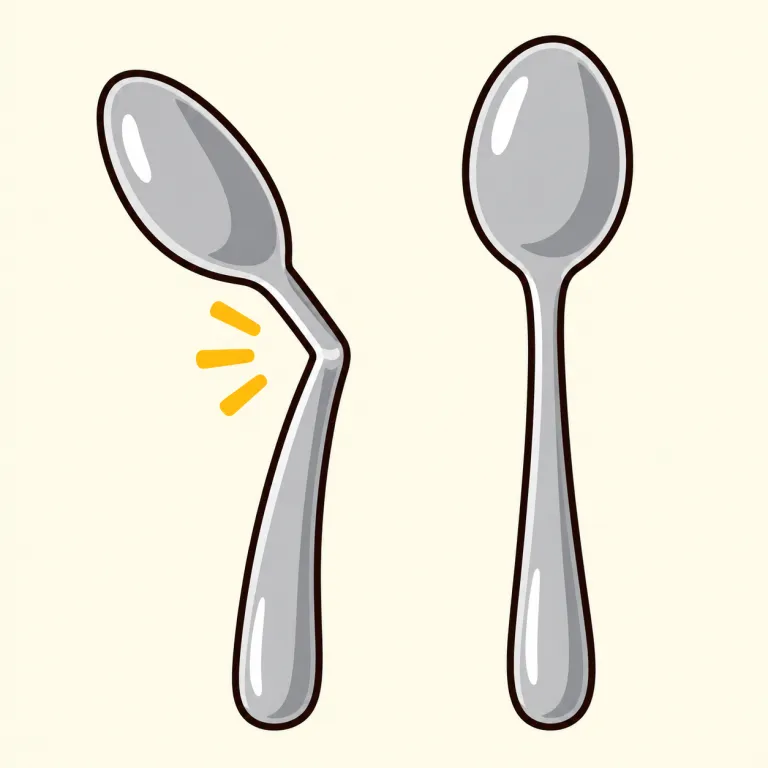
曲がった
解説 Definition
bent は bend(曲げる、曲がる)の過去形・過去分詞です。形容詞としては、まっすぐではなく曲がった状態を表します。
Bent describes something that is curved, angled, or forced out of its normal straight shape. It is also the irregular past tense and past participle of the verb bend, although the examples here use it adjectivally.
覚え方のコツ Memory Tip
bent は bend の不規則な過去形・過去分詞で、形容詞では「力が加わって、まっすぐでなくなった状態」を表します。bend に -ed を付ける形ではない点に注意し、a bent spoon、bent wire、a bent corner のように、曲がった物を修飾する組み合わせで覚えましょう。発音は /bent/ です。
Link bent directly to bend, but remember that it is irregular: the past and past participle are bent, not bended in ordinary use. As an adjective, it describes the resulting condition after something has been bent. Picture a bent spoon, bent wire, or a bent corner—each was once straighter and has been forced out of shape. This separates bent from naturally curved, which may describe an intended or original shape. The pronunciation is /bent/, with the same vowel as sent. Keeping the sequence bend–bent–bent together will help with both verb forms and the adjective.
例文
The spoon is bent.
そのスプーンは曲がっています。
He fixed the bent wire.
彼は曲がった針金を直しました。
The old sign had a bent corner.
その古い看板は角が曲がっていました。
bent の類義語・関連語
bent の語源・成り立ち Etymology
bent は動詞 bend の過去分詞・形容詞化で、bend は古英語 bendan「曲げる」に由来します。『まっすぐでない形』がそのまま意味になった語で、bind や bond も同系とされ、締めたり縛ったりして形が変わる感覚とつながっています。
Bent is the irregular past tense and past participle of bend and also developed an adjectival use from that participle. Bend comes from Old English bendan, “to bend,” and belongs to a Germanic history associated with bending or fastening. The vowel change from bend to bent marks the inherited irregular past form; modern English does not normally create this form by adding -ed. The adjective literally describes the state produced by bending.
同じレベルの語彙をもっと
外部辞書で調べる
この英単語をクイズで覚えよう