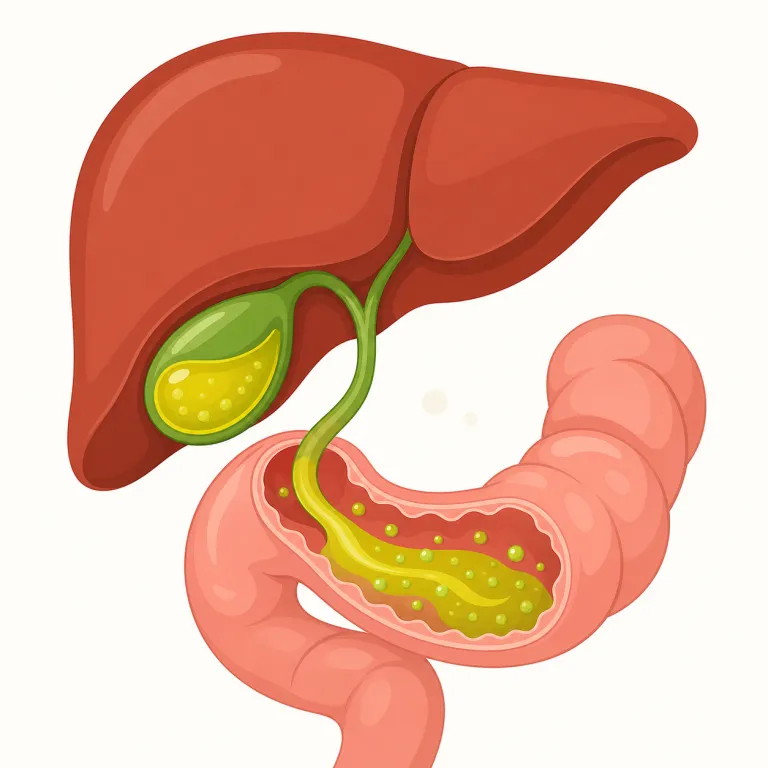
bile
bile は英検1級レベルの英単語で、「胆汁」という意味があります。発音記号は /ˈbaɪl/ です。
胆汁
解説 Definition
肝臓が分泌する黄緑色の液体。消化を助ける重要な役割を果たす。また、比喩的に強い怒りや毒性を意味することもある。
Bile is a yellow-green liquid made by the liver that helps the body digest fat. In medical contexts, it is talked about as part of the digestive system.
覚え方のコツ Memory Tip
医学語では biliary tract(胆道)、bilious(胆汁の/むかついた)など bili- が見えたら「胆汁まわり」とまとめて覚えると定着しやすい。bile 単体はまず消化を助ける体液で、stomach acid(胃酸)とは別物。そこから「苦々しさ・毒のある怒り」という比喩にも広がる。文章で bitter, venom, anger などの語と近くに出たら比喩用法を疑うとよい。体内の液体の名が、そのまま感情の毒気にもつながる語だと押さえると忘れにくい。
If you know words like `biliary`, the `bil-` part can remind you of this word. Also connect `bile` with the feeling of `bitter` language, because English sometimes uses it for angry or poisonous emotion. That link between a body fluid and bitterness makes it easier to remember.
例文
Bile is essential for breaking down fats during digestion.
胆汁は消化中に脂肪を分解するために不可欠である。
His bitter remarks were full of bile and resentment.
彼の辛辣な発言は悪意と憤りに満ちていた。
The liver produces bile to aid in the digestive process.
肝臓は消化を助けるために胆汁を作る。
bile の類義語・関連語
派生語
紛らわしい語
bile の語源・成り立ち Etymology
bile はフランス語 bile を経てラテン語 bilis「胆汁」に由来します。古代医学では胆汁が怒りや不機嫌を生む体液と考えられたため、体内の液体がそのまま「苦々しさ」の比喩も帯びました。bilious や biliary も同じ bilis 系です。
Bile came into English through French from Latin bilis, meaning "bile" or "gall." In ancient medicine, bile was believed to be one of the body’s main fluids and was linked with anger and bitterness. Because of that, the word also developed figurative ideas of bitterness in feeling or tone. Related words include bilious and biliary.
同じレベルの語彙をもっと
英検1級の一覧へ →外部辞書で調べる
この英単語をクイズで覚えよう