ボンゴ、ボンゴレイヨウ
noun 名詞アフリカ中部の森林に生息する大型のレイヨウを指す。赤褐色の体に細い白色の縦じまがあり、雌雄ともにらせん状の角を持つことで知られる。
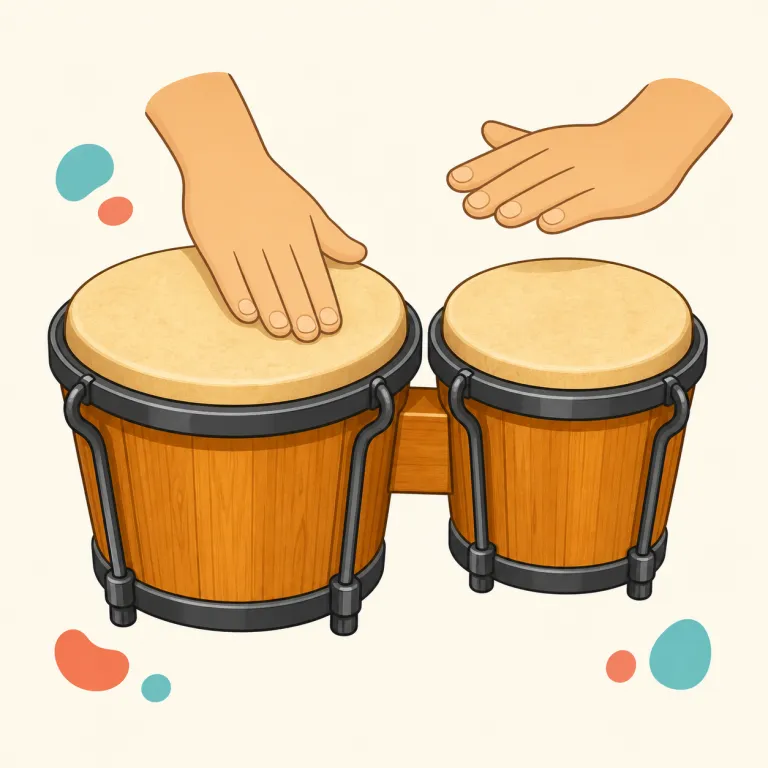
手で演奏される小さな円筒形の太鼓。ペアで用いられることが多い。
A bongo is a small drum played with the hands, usually as one of a pair. It is common in Latin and popular music. The word often appears in musical contexts rather than general conversation.
bongo は「太鼓一般」ではなく、ラテン音楽でよく見る、小さな太鼓を2つ1組で手で叩く楽器として覚えると定着しやすいです。drum の広い意味の中の具体物で、conga より小さく高めの音、という対比を置くと整理できます。実際には bongos と複数形で現れることも多いので、「左右に並んだペアを手のひらで細かく刻む場面」まで一緒に思い浮かべるのがコツです。
Remember `bongo` as a specific kind of drum, not just any drum. Picture two small hand drums played together in Latin music. The plural `bongos` is also very common, so imagine the pair, not only one drum.
He learned to play the bongo drums as a child in Cuba.
彼は子どもの頃キューバでボンゴの演奏を習った。
He struck the smaller bongo with his fingertips.
彼は小さいほうのボンゴを指先で叩いた。
The bongo added a sharp rhythm to the song.
そのボンゴは曲に鋭いリズムを加えた。
文脈によって、次の意味でも使われます。
アフリカ中部の森林に生息する大型のレイヨウを指す。赤褐色の体に細い白色の縦じまがあり、雌雄ともにらせん状の角を持つことで知られる。
bongo はアメリカ系スペイン語 bongó から入り、さらにアフリカ系、特にバントゥー諸語にさかのぼると考えられます。分解しにくい借用語ですが、bongos も同根で、ラテン音楽に残る語形そのものが、太鼓のリズムごと運ばれてきた感じを伝えます。
Bongo entered English through American Spanish bongó and is generally believed to go back to African, especially Bantu, languages. It is a borrowed word rather than one that can be easily broken into smaller parts in English. The form stayed close to the original as it traveled with the musical instrument and its rhythm; bongos is the closely related English plural form.
この英単語をクイズで覚えよう