ブルータリズムの建築家、支持者
noun 名詞ブルータリズム様式を採用する建築家や、その理念を支持する人を指す可算名詞です。建物やデザインの特徴を表す形容詞用法とは異なり、a brutalist や brutalists の形で人物を表します。
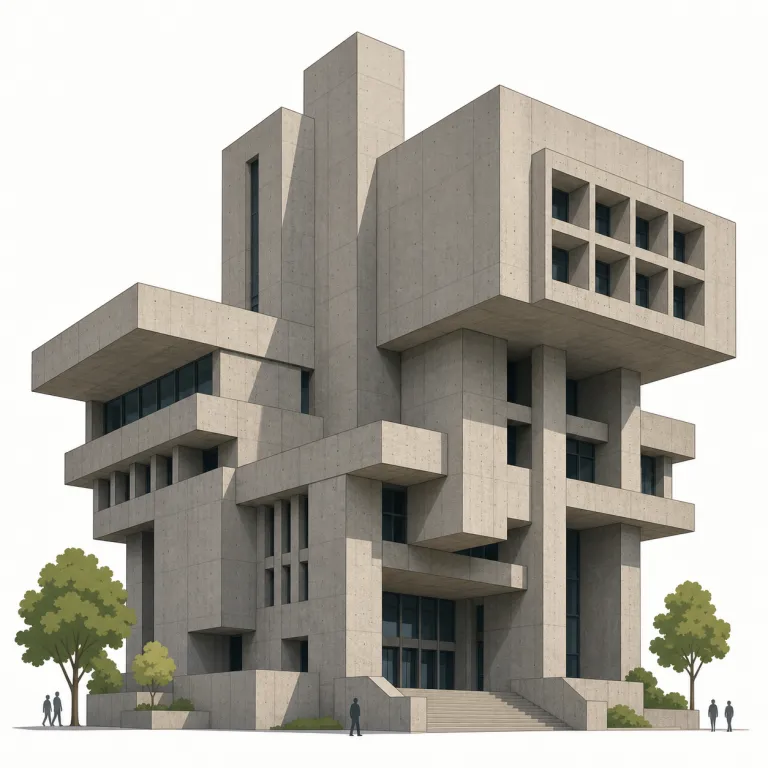
コンクリートの素材感をむき出しにした建築様式に関するさま。1950〜70年代に流行した。
Brutalist describes a style of architecture with large, heavy shapes and a plain, rough look, often using raw concrete. It is mainly used when talking about buildings from the mid to late 20th century.
brutal を見て「残酷な」を先に思い出すとズレます。brutalist は感情の harsh さより、Brutalism という建築様式の形容詞として覚えるのが近道です。まず brutalist architecture / brutalist building という固まりで記憶し、raw concrete, bare walls, blocky shapes のような「飾らず、むき出し、無骨」という景色と結び付けると定着します。modernist, minimalist などと同じく、-ist が付くと「その流派・様式の」という読み方になりやすい点も一緒に押さえると忘れにくいです。
Do not start from everyday `brutal` = cruel, because that can mislead you. Remember `brutalist` as a style word, usually in `brutalist architecture` or `brutalist building`. Connect it with raw concrete, bare walls, and block-like shapes.
The brutalist architecture of the university library divides opinion among students.
大学図書館のブルータリズム建築は学生の間で賛否が分かれる。
Many brutalist buildings from the 1960s are now protected as cultural heritage.
1960年代の多くのブルータリズム建築は現在、文化遺産として保護されている。
The brutalist concrete tower stood in stark contrast to the surrounding Victorian houses.
そのブルータリズム様式のコンクリート塔は、周囲のヴィクトリア朝様式の家々と際立った対照をなしていた。
文脈によって、次の意味でも使われます。
ブルータリズム様式を採用する建築家や、その理念を支持する人を指す可算名詞です。建物やデザインの特徴を表す形容詞用法とは異なり、a brutalist や brutalists の形で人物を表します。
brutalist は Brutalism 由来で、もとはフランス語 béton brut「打ち放しコンクリート」の brut「粗のまま」にさかのぼります。-ist は様式との結びつきを示し、「残酷な」より「素材をむき出しにした」建築だとわかると意味が通ります。
Brutalist comes from Brutalism, a name influenced by French beton brut, meaning "raw concrete." Here brut meant "rough" or "unfinished," not "cruel," and -ist marks connection with a style or movement. The word came to describe architecture that shows materials openly, especially bare concrete, rather than hiding them.
この英単語をクイズで覚えよう