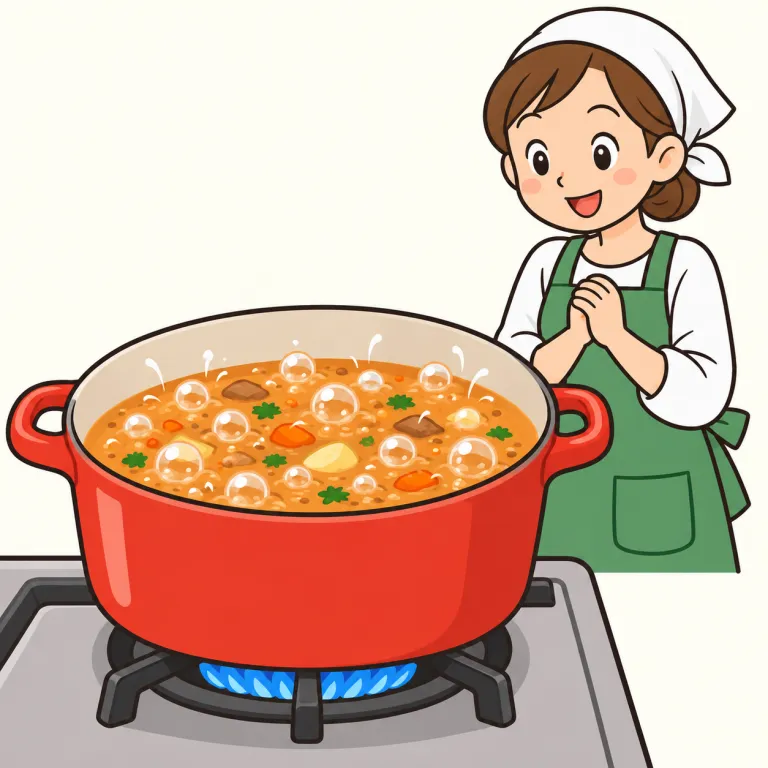
泡立つ
解説 Definition
bubbling は bubble(泡立つ)の現在分詞・動名詞です。液体や気体が泡を出している状態を表し、料理や水の様子を説明するときによく使われます。
The present participle or gerund of bubble, describing a liquid that is producing and releasing bubbles. It often refers to water, soup, or sauce moving with visible bubbles because of heat or escaping gas.
覚え方のコツ Memory Tip
bubbling は bubble「泡立つ」の語末の e を落として -ing を付けた形で、b が二つ続く綴りを保ちます。soup、water、sauce が熱でぶくぶく泡を出す場面を思い浮かべ、be bubbling、keep bubbling の形で覚えましょう。boiling は沸点で沸騰すること、bubbling は泡が出る見た目や動きに焦点があります。
Start with bubble and drop its final silent e before adding -ing: bubble becomes bubbling. Keep the double b in the middle. The sound and shape of the word suggest repeated round bubbles rising and bursting. Picture soup bubbling on a stove or water bubbling in a pot, and remember the common patterns be bubbling and keep bubbling. Bubbling focuses on the visible production and movement of bubbles. Boiling specifically means that a liquid has reached its boiling point, so a liquid can bubble gently without being at a full boil.
例文
The soup is bubbling on the stove.
スープがコンロの上で泡立っています。
We watched the water bubbling in the pot.
私たちは鍋の中で水が泡立つのを見ました。
The sauce kept bubbling after I lowered the heat.
火を弱めたあとも、ソースは泡立ち続けました。
bubbling の類義語・関連語
対義語
紛らわしい語
bubbling の語源・成り立ち Etymology
bubbling は bubble「泡立つ」に -ing が付いた形で、bubble は中英語 bubble、中オランダ語 bobbel とも関係する擬音的な語です。ぶくぶくという音と丸い泡の動きがそのまま語になったため、「泡立つ」の意味が直感的にわかります。関連語は bubble, bubbly。
Bubbling is formed from bubble by dropping the final silent e and adding -ing. Bubble appeared in Middle English and is related to forms such as Middle Dutch bobbel. The word is generally regarded as imitative: its repeated consonants and vowels evoke the sound and motion of bubbles forming and bursting. This sound-based origin fits the modern verb closely, whether bubbles result from heating, gas, or movement in a liquid.
同じレベルの語彙をもっと
外部辞書で調べる
この英単語をクイズで覚えよう