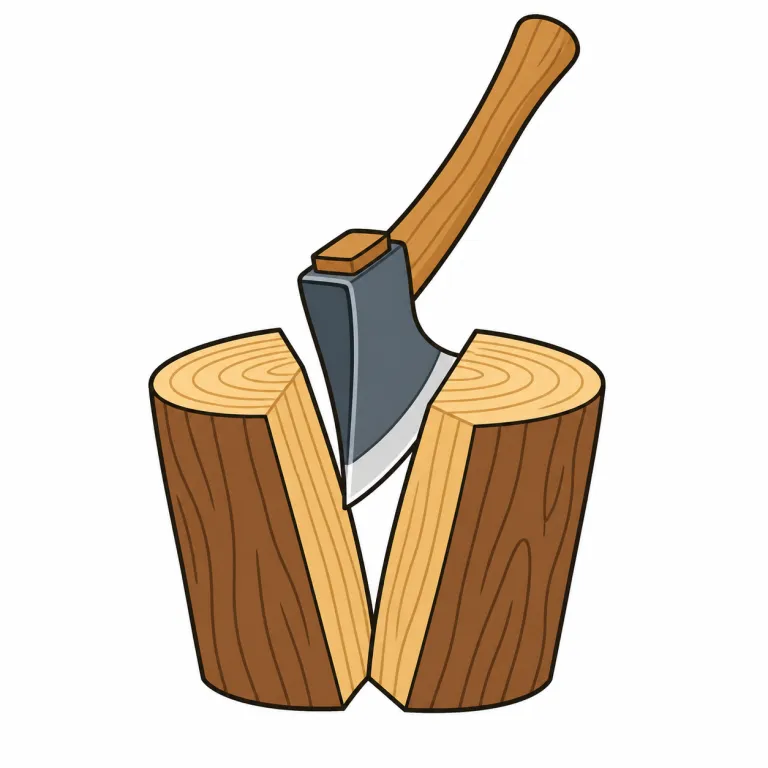
固く付く、忠実であり続ける
verb 動詞cleave to ... の形で、人・信念・伝統などに固く結び付く、または忠実であり続けることを表す。物を切り割る意味とは異なる同綴りの cleave の -ing 形で、やや文語的に使われる。
cleaving は cleave の動名詞・名詞形で、物を切り割くことや二つに分けることを指す。肉や石材を断ち切る作業にも、鉱物や結晶が一定の面に沿って割れる劈開にも使われる。化学や生化学では、分子や結合が切断される過程を表すこともある。
Cleaving is the act or process of splitting, cutting, or dividing something into parts. It is often used in science or technical fields for materials that break along a natural line or structure. The word sounds formal and is not common in everyday conversation.
まず cleave を「切って二つに分ける」と押さえると、cleav-ing はその動作そのものだと見やすいです。know していると便利なのは cleavage で、こちらも「割れ目・分裂」。つまり cleaving は「割る動き」、cleavage は「割れた結果の筋・境目」と整理すると記憶に残ります。鉱物なら“決まった面に沿って割れる”、化学なら“分子を切って分ける”場面で出やすい語。なお cleave には「くっつく」という別の同綴り語もあるので、この語では必ず「split 側」の意味だと切り分けて覚えるのがコツです。
Start with `cleave` as the "split" verb. Then `cleaving` is the act of splitting, while `cleavage` is the split or gap that appears after it. Be careful: `cleave` also has another meaning, "stick closely," but in this word it is the "cut apart" side.
The cleaving of the diamond required extraordinary precision.
そのダイヤモンドの劈開には並外れた精密さが必要だった。
In biochemistry, cleaving peptide bonds is essential for protein digestion.
生化学では、ペプチド結合を切断することはタンパク質の消化に不可欠である。
Stoneworkers planned the cleaving of the slab along its natural lines.
石工たちは、その石板を自然の筋に沿って割る工程を計画した。
文脈によって、次の意味でも使われます。
cleave to ... の形で、人・信念・伝統などに固く結び付く、または忠実であり続けることを表す。物を切り割る意味とは異なる同綴りの cleave の -ing 形で、やや文語的に使われる。
cleaving「劈開」は cleave「割る」+ -ing で、cleave は古英語 cleofan、さらにゲルマン系の「裂く」語群にさかのぼる。「割れること・割れやすさ」がそのまま鉱物の劈開の意味になり、同綴りの cleave「くっつく」とは別語源。関連語は cleft、cloven。
Cleaving comes from cleave, meaning "split," plus -ing. Cleave goes back to Old English cleofan and older Germanic roots meaning "divide" or "cut apart." In scientific use, the idea narrowed to the way a mineral naturally splits; it is not related to the different verb cleave meaning "stick to."
この英単語をクイズで覚えよう