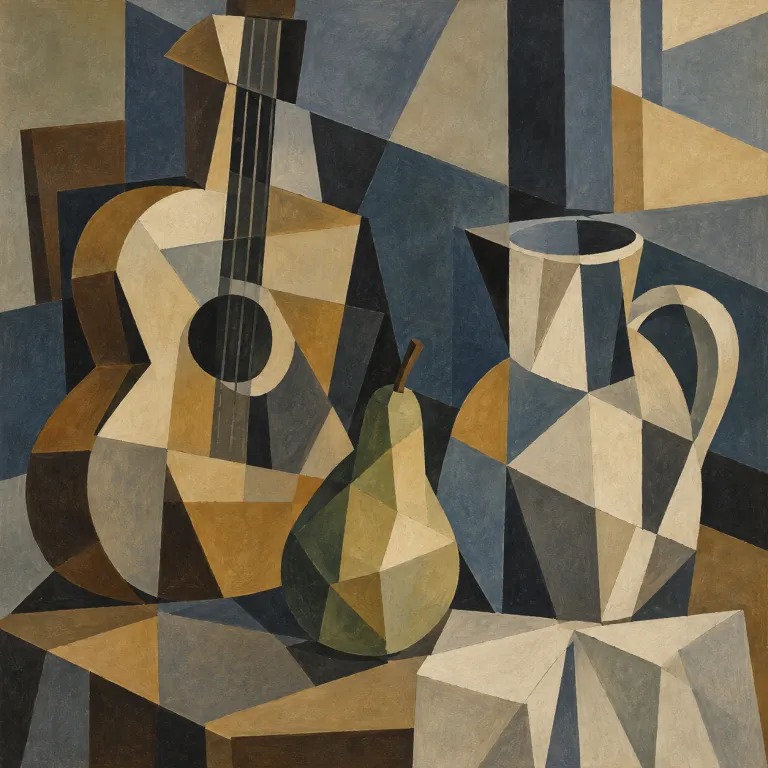
キュビズム
解説 Definition
20世紀初頭にピカソやブラックが創始した美術運動。対象を幾何学的な形に分解して表現する手法。
Cubism is an art style that shows people or objects as a group of shapes, angles, and different views at the same time. It developed in the early 20th century and is strongly connected with modern art. The style often looks abstract rather than realistic.
覚え方のコツ Memory Tip
cube(立方体)を知っていると、cubism は「ものを立方体のような面や角に分けて見る表現」だとつかみやすいです。-ism は Buddhism などと同じで「主義・様式」を作る語尾なので、cube + -ism で「キューブ的に捉える様式」。絵を自然にそっくり描くのでなく、人物や物を複数の面に分解して再構成する、ピカソの角ばった絵を一緒に思い浮かべると定着します。abstract art 全般より、幾何学的に“面へ砕く”感じが核です。
The key is `cube`. `Cubism` is the art style that makes you think of objects as shapes, angles, and flat sides, almost like breaking them into cubes. The ending `-ism` means a style or movement, as in many other art or belief words. Picture a Picasso painting to make the word stick.
例文
Cubism revolutionized visual art by depicting subjects from multiple perspectives simultaneously.
キュビズムは対象を同時に複数の視点から描くことで、視覚芸術に革命をもたらした。
Picasso and Braque are widely credited as the founders of Cubism.
ピカソとブラックはキュビズムの創始者として広く認められている。
The influence of Cubism extended beyond painting into sculpture, architecture, and graphic design.
キュビズムの影響は絵画を超えて、彫刻、建築、グラフィックデザインにまで及んだ。
cubism の類義語・関連語
紛らわしい語
cubism の語源・成り立ち Etymology
cubism はフランス語 cubisme に由来し、cube「立方体」+ -ism「主義」からできた語で、cube はさらにラテン語 cubus、ギリシャ語 kybos にさかのぼります。『物を立方体のような形に分けて見る芸術』という発想が語形にそのまま出ており、関連語に cubic、cube があります。
Cubism comes from French cubisme, built from cube and the suffix -ism. Cube goes back through Latin cubus to Greek kybos, meaning a cube or die. The name reflects the style's way of showing objects as broken into block-like, geometric forms. Related English words include cube and cubic.
同じレベルの語彙をもっと
外部辞書で調べる
この英単語をクイズで覚えよう