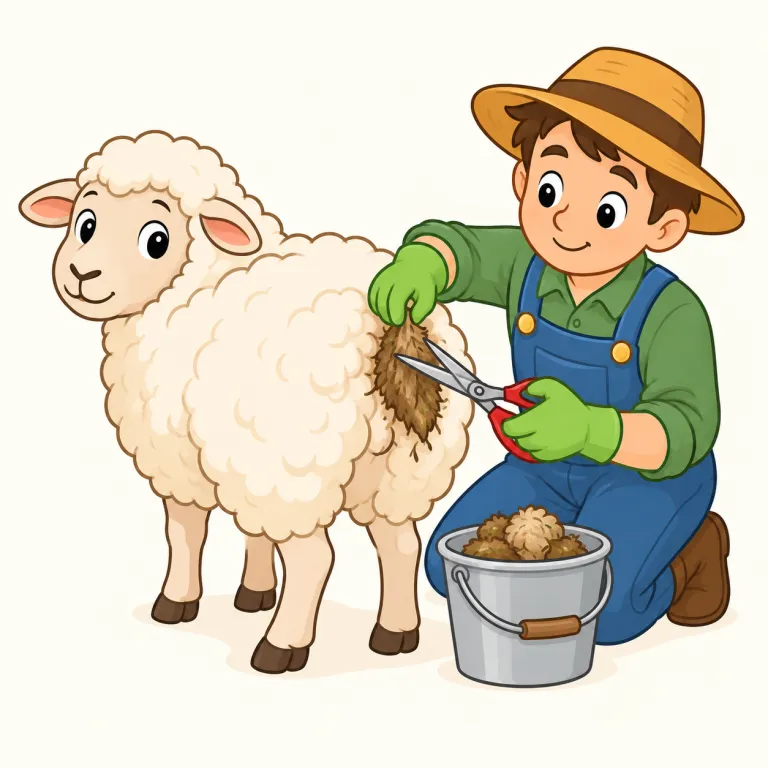
ダグ
解説 Definition
主にオーストラリア・ニュージーランド英語で、羊の尻の周囲に垂れ下がった、ふんで固まった毛の房を指す名詞。くだけた人物評では、風変わりな人、野暮ったい人、または人を笑わせる面白い人を指す。
A dag is, chiefly in Australian and New Zealand English, a lock of wool around a sheep’s hindquarters that has become matted with dung. In informal Australian usage, it can also mean an unfashionable, eccentric, or amusing person.
覚え方のコツ Memory Tip
dag は主にオーストラリア・ニュージーランド英語で使われる地域語です。牧畜の場面では羊の後部の毛に付いたふんの塊を指し、くだけた人評では「風変わりだが面白い人」を表します。標準的な日常語ではないため、文脈が羊なら汚れた毛、人なら愛嬌のある変わり者、と二つの典型場面を分けて覚えましょう。
Treat dag as a regional word rather than an everyday international term. In a farming context, picture a clump of wool hanging from a sheep’s rear and matted with dung; that concrete image gives the older pastoral sense. In informal Australian speech, the same spelling may describe an eccentric, unfashionable, but often amusing or likable person. Let the surrounding noun and situation choose the meaning: sheep, wool, and shearing point to the literal sense, while a description of someone’s personality points to the colloquial human sense. Do not confuse dag with the much more common word dog.
例文
The farmer cut the dags from the sheep before shearing.
農場主は毛刈りの前に、羊からふんで固まった毛の房を切り取った。
Everyone likes Ben because he is such a dag.
ベンは風変わりで面白い人なので、みんなに好かれている。
dag の類義語・関連語
dag の語源・成り立ち Etymology
「垂れ下がった房・先端」を表す語義は中英語の dagge にさかのぼる。羊の汚れた毛房を指す語義や、オーストラリア・ニュージーランド口語の人物義が成立した詳しい経緯は明確でない。dagger や tag との関係が提案されることもあるが、確実な直接関係としては扱えない。
Dag is recorded from Middle English dagge in senses involving a pointed or hanging piece, such as a strip or ornamental edge of cloth. Its more remote relationships are uncertain, though comparable forms occur in neighboring European languages. The word later developed regional meanings, including a dung-matted lock of sheep’s wool and, in Australian informal usage, an eccentric or unfashionable person. Connections sometimes proposed with dagger or tag should not be treated as certain direct derivations.
同じレベルの語彙をもっと
外部辞書で調べる
この英単語をクイズで覚えよう