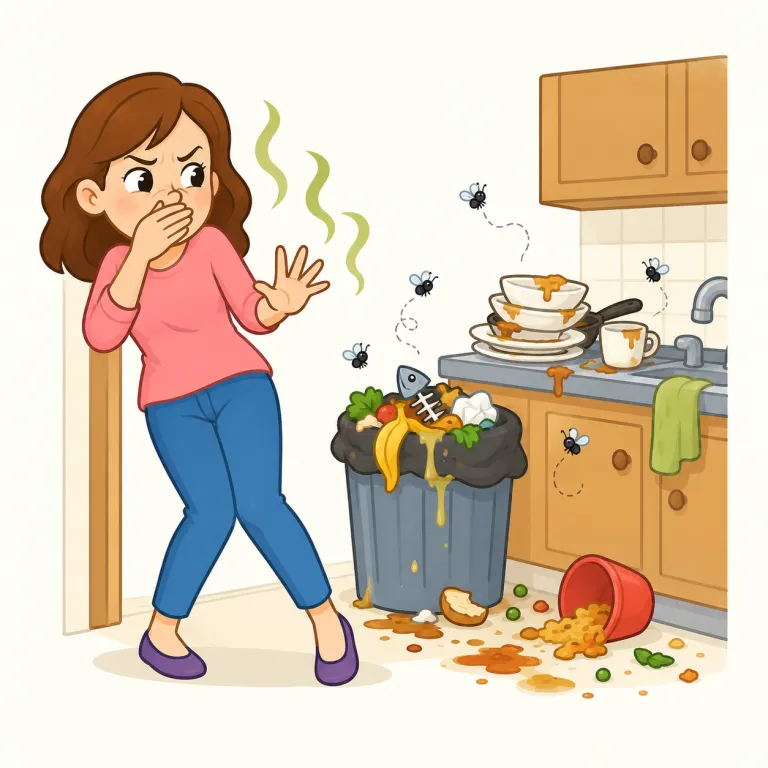
うんざりした
解説 Definition
disgusted は disgust(うんざりさせる、嫌悪感を抱かせる)の過去分詞からできた形容詞です。何かに強い不快感や嫌悪感を覚えて、うんざりしている状態を表します。
Feeling strong dislike, revulsion, or offended disapproval because of something extremely unpleasant or unacceptable. It commonly occurs with by, at, or with to identify the cause of the feeling.
覚え方のコツ Memory Tip
disgust「嫌悪感を抱かせる」に -ed を付けた過去分詞由来の形容詞で、規則変化 disgust–disgusted–disgusted、語末は /ɪd/ と発音する。人の感情には disgusted、嫌悪感を起こす物には disgusting を使う。be disgusted by the mess、be disgusted with his behavior の形で、強い不快感を受けた側を思い浮かべる。
Connect disgusted with the verb disgust: disgust–disgusted–disgusted is regular, and the -ed ending is pronounced /ɪd/. The adjective describes the person who experiences the feeling. By contrast, disgusting describes the thing that causes it: a customer is disgusted, while a filthy kitchen is disgusting. Practice the common patterns be disgusted by a mess and be disgusted with someone’s rude behavior. The historical link with taste can support the image of a reaction so unpleasant that it feels physically sickening, though modern use also covers strong moral disapproval.
例文
She looked disgusted by the dirty kitchen.
彼女は汚れた台所にうんざりした様子でした。
I was disgusted with his rude behavior.
私は彼の失礼な態度にうんざりしました。
The customers were disgusted when they saw the mess.
客たちはその散らかりようを見てうんざりしました。
disgusted の類義語・関連語
類義語
紛らわしい語
disgusted の語源・成り立ち Etymology
ラテン語 gustus(味)に否定の接頭辞 dis- が付き、古フランス語 desgouster(食欲を失わせる)を経て英語に。原義は「まずくて吐き気がする」で、そこから精神的な嫌悪感へ拡大。関連語: gusto(熱意=味わう喜び)、gustatory(味覚の)。
Disgusted is the past participle of disgust used as an adjective. Disgust entered English through French dégoûter or earlier desgouster, meaning to cause distaste or loss of appetite. Its deeper elements are related to Latin gustus, “taste,” with a negative prefix. The meaning expanded from a bad physical taste and loss of appetite to strong emotional or moral revulsion. The suffix -ed marks the person affected by that feeling.
同じレベルの語彙をもっと
外部辞書で調べる
この英単語をクイズで覚えよう