平らげる
phrasal_verb 句動詞食べ物や飲み物をすっかり平らげる意味。くだけた言い方で、dispose of a large mealのように、量の多いものを素早く、または難なく食べ終えたことをややユーモラスに表す。
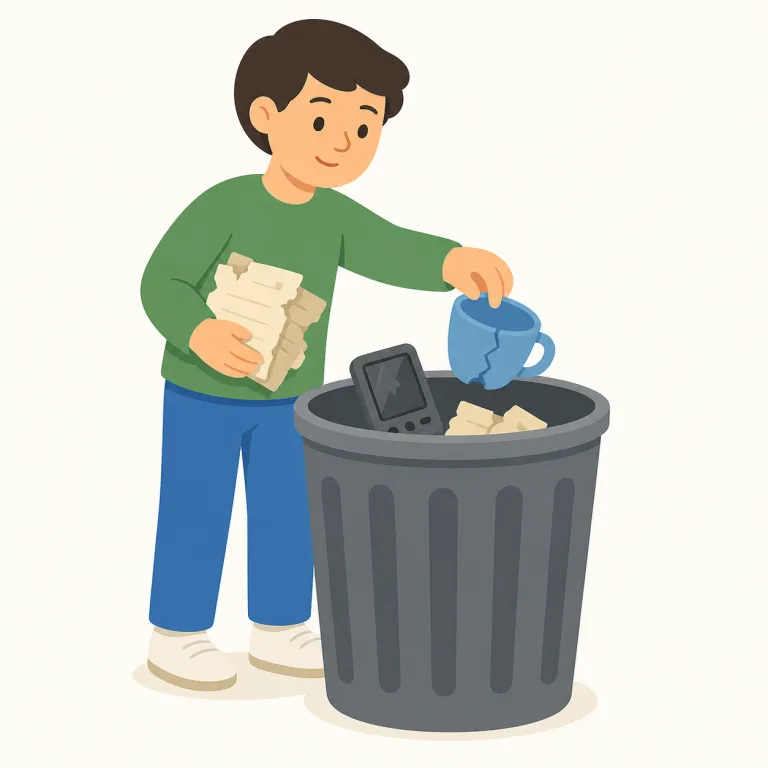
dispose of は英検1級・TOEIC 860・TOEFL 80・IELTS 6.5レベルの英熟語で、「処分する」という意味があります。発音記号は /dɪˈspoʊz əv/ です。
不要な物を適切に処理・処分すること。廃棄する意味で使う。
To dispose of means to get rid of something, especially in a proper, safe, or legal way. It is often used for trash, unwanted items, or harmful materials. In formal English, it can also mean to deal with something completely.
"dispose of" は単なる「捨てる」より、不要物・危険物・古い設備などを適切に片づけて手元からなくす感じで覚えると残りやすい。まず "dispose" を「配置する・処理を決める」とつかみ、"of" が付くと対象を自分の管理下から離して始末する語感になります。"throw away" より事務的で、"dispose of waste / old furniture" の形が頻出。"get rid of" に近いが、こちらは回収・廃棄・寄付・法令順守まで含む硬めの「処分する」です。証拠や人を目的語にする別の強い含みとは切り分け、ここでは不要物の処理を中心に覚えます。
`Dispose of` sounds more formal than `throw away`. It helps to think of removing something properly and completely, especially `waste`, `old equipment`, or dangerous material. `Of` adds the sense of getting it fully out of your hands.
You must dispose of hazardous waste according to regulations.
有害廃棄物は規制に従って処分しなければならない。
He disposed of the old furniture by donating it to charity.
彼は古い家具を慈善団体に寄付して手放した。
The company needs to dispose of outdated inventory before the audit.
会社は監査の前に陳腐化した在庫を処分する必要がある。
文脈によって、次の意味でも使われます。
食べ物や飲み物をすっかり平らげる意味。くだけた言い方で、dispose of a large mealのように、量の多いものを素早く、または難なく食べ終えたことをややユーモラスに表す。
競争相手や敵を打ち負かして退ける意味。dispose of an opponent in straight setsのようにスポーツ報道で使われ、物を廃棄するのではなく試合から相手を脱落させることを表す。
dispose は古フランス語経由でラテン語 disponere にさかのぼり、dis-「離して」+ ponere「置く」の組み合わせ。つまり「それぞれの場所へ離して置く」から、dispose of は不要になった物を適切な行き先へ移して処分する意味になる。関連語は position, compose。
Dispose comes through Old French from Latin disponere, built from dis-, "apart," and ponere, "to place." The original sense was arranging or placing things in order or in the proper place. Dispose of grew from that idea into putting something away from oneself, especially by removing or getting rid of it. Related English words from the same Latin root include position and compose.
この英熟語をクイズで覚えよう