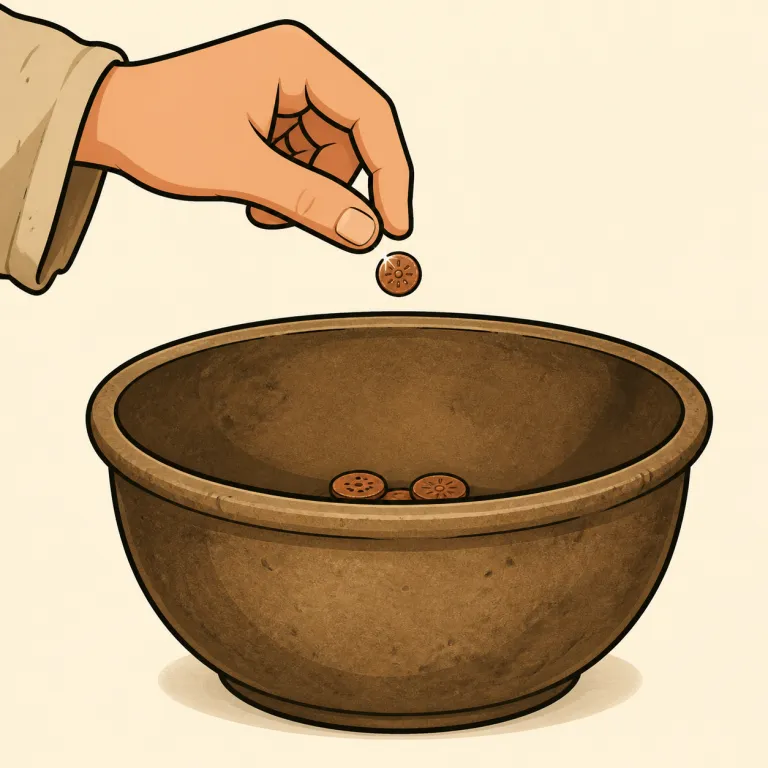
少額貨幣
解説 Definition
ごくわずかな金額を表す古い小銭。取るに足らないものの比喩にも使われる。
A doit is a very small coin of little value, especially one used in the past. It appears mainly in historical or literary contexts rather than modern everyday English. The word can also suggest something worth almost nothing.
覚え方のコツ Memory Tip
見た目は do it そのものですが、これは動詞句ではなく名詞。まず「penny や cent よりさらに古くて小さい coin」と結びつけると覚えやすいです。実際には worth と一緒に not worth a doit の形で「びた一文の価値もない」と出ることが多く、使用場面ごと記憶できます。日常語ではないので、単独の意味を追うより「古風な極小金額を表す決まり文句用の語」として丸ごと保持すると、do it との見間違いも防げます。
It looks like `do it`, but here it is a noun, not a verb phrase. The easiest memory hook is the fixed expression `not worth a doit`, meaning almost no value at all. Think of it as an old tiny coin used in a very old-fashioned phrase.
例文
He dropped a doit into the beggar's bowl.
彼は物乞いの器に小銭を一枚入れた。
The merchant counted every doit before leaving the market.
商人は市場を去る前に、小銭を一枚残らず数えた。
Even a doit would help pay for bread.
わずかな小銭でもパン代の足しになるでしょう。
doit の類義語・関連語
doit の語源・成り立ち Etymology
doit は中低地ドイツ語 doyt から英語に入った語で、同系のオランダ語 duit と結びつく小額貨幣名です。さらに古ノルド語系の「切り取った小片」にさかのぼるとされ、関連語に duit があり、「取るに足りない額」の感じが語源から納得できます。
Doit came into English from Middle Dutch or a related Low German form such as doyt, the name of a very small coin. It is closely linked with Dutch duit. Because it named something of tiny value, the word later suggested a trivial or almost worthless amount. The Dutch form duit is the closest related word still often mentioned.
同じレベルの語彙をもっと
外部辞書で調べる
この英単語をクイズで覚えよう