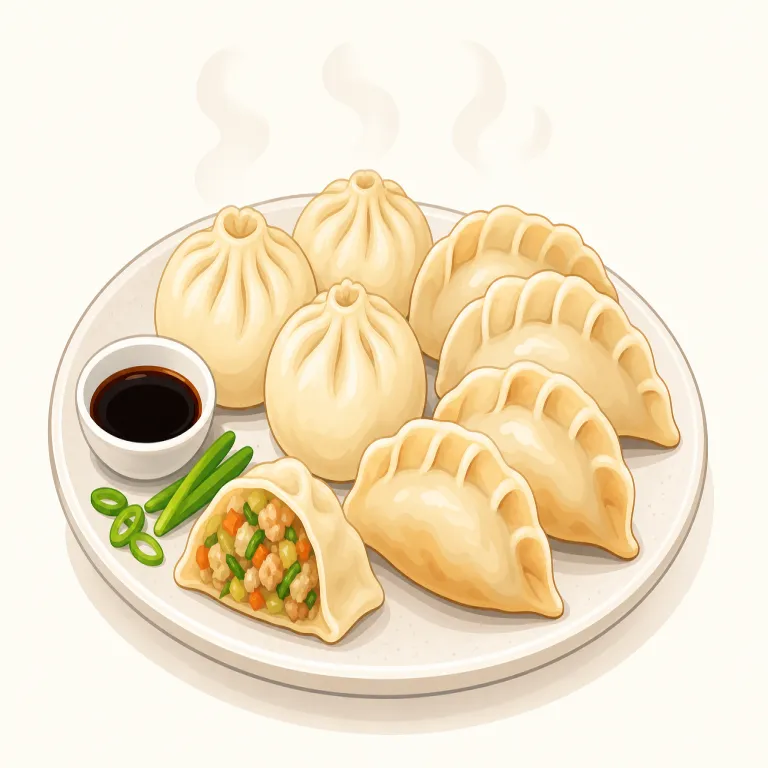
団子、ギョーザ類
解説 Definition
小麦粉や米粉などの生地を丸めたり、肉や野菜などの具を包んだりして作る料理の総称。蒸す、ゆでる、焼く、揚げるなど調理法はさまざまで、甘いものにも食事向けのものにも使われる。
A dumpling is a small piece of dough, or dough filled with meat, vegetables, or other ingredients, that is cooked by boiling, steaming, or frying. Different cultures have different kinds of dumplings, so the exact shape and filling can vary a lot. The word usually refers to a type of food rather than a specific recipe.
覚え方のコツ Memory Tip
まず「gyozaの英訳」ではなく、もっと広い食べ物名だと押さえると残りやすいです。dumpling は「粉の生地で作る、包む・丸める系」の総称で、boiled / steamed / fried dumplings のように調理法を付けてよく使われます。wonton や ravioli まで含みうる広さがポイント。特定の一品名ではなく、「生地が主役のひとかたまり」という感覚で覚えると、団子にもギョーザ類にも自然につながります。
Do not tie this word to just one dish. `Dumpling` is a broad food word for small pieces of dough, often filled, wrapped, or shaped, and you often see `boiled`, `steamed`, or `fried dumplings`. Think of it as a dough-based food family, not one exact item.
例文
Dumplings are typically made from dough and can be steamed or boiled.
団子やギョーザ類はふつう生地で作られ、蒸したりゆでたりして調理される。
She made sweet dumplings for dessert.
彼女はデザートに甘い団子を作った。
Traditional dumplings are often served during festivals.
伝統的な団子やギョーザ類は祭りのときによく出される。
dumpling の類義語・関連語
類義語
紛らわしい語
dumpling の語源・成り立ち Etymology
dumplingは中英語dumpe「塊・こぶ」に、小さいものを表す接尾辞-lingが付いた語です。もともと「小さな塊」という感覚で、丸い団子の姿がそのまま意味になりました。近縁のdumpyやdumpも、ずんぐりした塊の感じを残します。
Dumpling comes from Middle English dump, meaning a lump or thick mass, with the small-thing ending -ling. So it originally meant something like "a little lump." That shape naturally became the name for a small round mass of dough. Related words such as dumpy and dump keep the same idea of heaviness or lumpiness.
同じレベルの語彙をもっと
外部辞書で調べる
この英単語をクイズで覚えよう