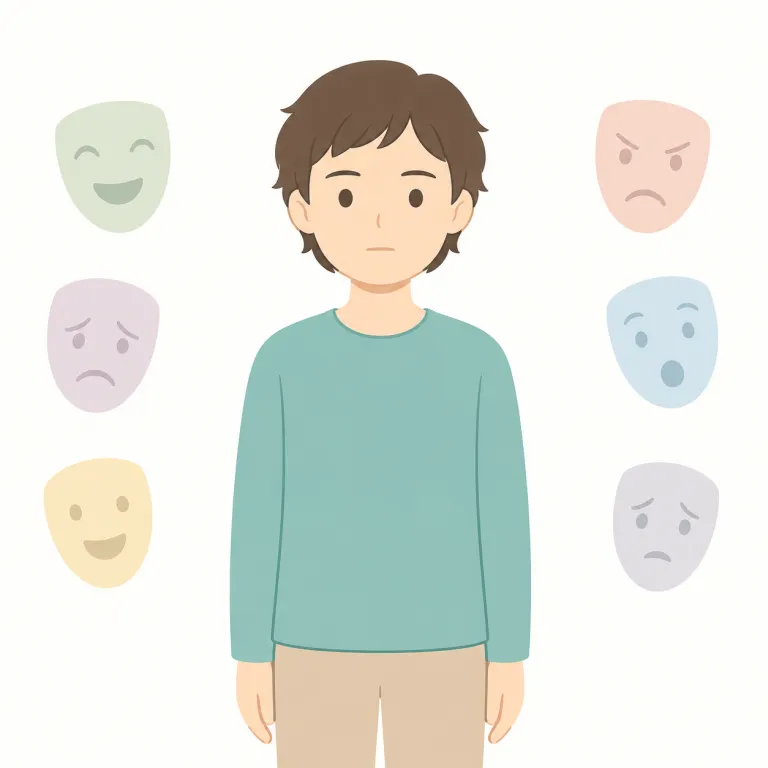
無感情
解説 Definition
感情や情動を感じないか、感じることが非常に少ない状態。無表情または冷たい態度を表します。
Emotionless means showing no feelings or emotional reaction. It is often used to describe a person's face, voice, or behavior when they seem calm, cold, or empty. It does not always mean the person has no feelings inside.
覚え方のコツ Memory Tip
まず emotional(感情的な)を知っていれば、その反対側にある語として覚えやすいです。emotion に -less「ない」が付いて「感情がない」。careless, hopeless などと同じ -less パターンでまとめると定着します。使う場面は an emotionless face / voice / response のように、表情・声・反応が平板で気持ちが見えないとき。calm は落ち着いているだけですが、emotionless は外から見て感情がほぼ出ていない冷たさまで含みやすい点に注意。
This one is very clear if you know `-less`. `Emotion` + `-less` means "without emotion," just like `careless` or `hopeless`. Picture an emotionless face or voice: not simply calm, but showing almost nothing.
例文
The actor delivered an emotionless performance that seemed robotic.
その俳優は、ロボットのような感情のない演技をしました。
She spoke in an emotionless voice about the tragedy.
彼女はその悲劇について感情のこもらない声で話しました。
His emotionless response surprised everyone in the room.
彼の感情を示さない反応は、その場にいた全員を驚かせました。
emotionless の類義語・関連語
emotionless の語源・成り立ち Etymology
emotionless は emotion+-less(古英語由来の「〜のない」)です。emotion はフランス語 émotion を経てラテン語 emovere(e-「外へ」+ movere「動かす」)に由来し、本来は「心を動かすこと」なので、「感情に動かされない」が核で、move や commotion も同根です。
Emotionless is built from emotion and the Old English-based suffix -less, meaning "without." Emotion came through French from Latin emovere, built from e- "out" and movere "to move." The older idea was of something that moves or stirs the mind, so emotionless developed the sense of "not moved by feeling." It shares its root with move and commotion.
同じレベルの語彙をもっと
外部辞書で調べる
この英単語をクイズで覚えよう