大敵、害となるもの
noun 名詞成功・健康・安全などを妨げたり損なったりする物事や要因を比喩的に指します。Stress is an enemy of sleepのように使い、敵意を持つ人物ではなく、望ましい結果に悪影響を与える存在を表します。
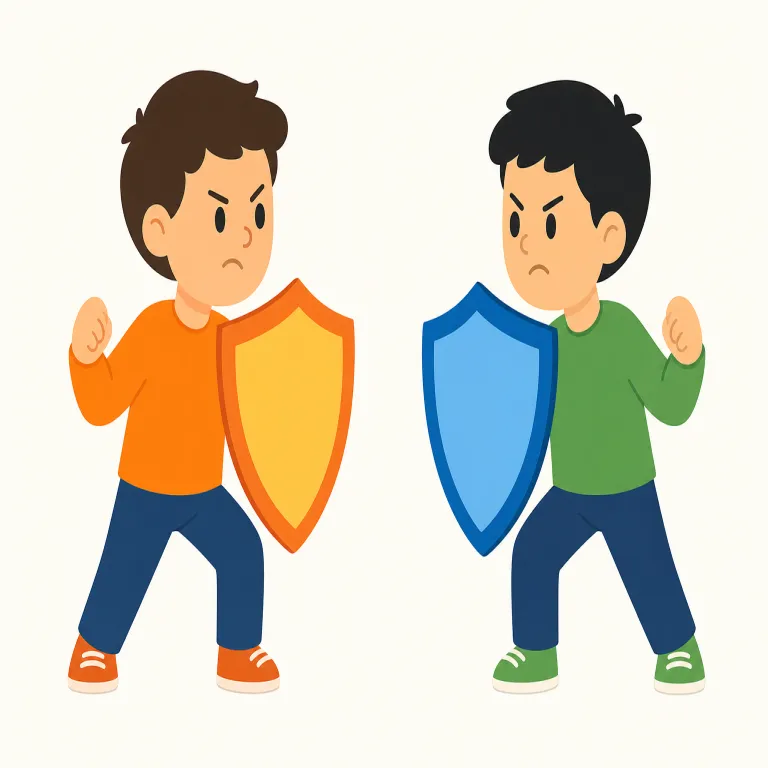
enemy は英検3級・TOEIC 730・TOEFL 60・IELTS 5.5レベルの英単語で、「敵」という意味があります。発音記号は /ˈɛnəmi/ です。
敵対関係にある、または対立している人や勢力のことです。戦争や競争などで対抗する相手を指し、自分や自分の側と対立する立場にある者を表します。友好的ではなく、敵意を持つ存在を意味します。
An enemy is a person, group, or country that is against you and may try to harm you or defeat you. It is commonly used in war, competition, and personal conflict. The word can be literal or sometimes used in a more general way for something strongly opposed to you.
まず friend の反対語として固定すると強いです。スポーツや受験でただ競う相手なら opponent や rival で済むことが多く、enemy はもっと敵意が強く、戦争・対立・物語で「こちらに害をなす相手」という感じ。だから日常の軽いライバルには使いにくい語です。make an enemy of...(〜を敵に回す)、public enemy、enemy territory など場面ごとのまとまりで覚えると残ります。つづりは enermy としないことにも注意。
Fix it in your mind as the strong opposite of `friend`. `Enemy` is stronger than `rival` or `opponent`, so think of war, stories, or deep conflict. Watch the spelling: `enemy`, not `enermy`.
The enemy is near us.
敵は私たちの近くにいる。
He sees the enemy.
彼は敵を見る。
Our enemy runs away.
私たちの敵は逃げる。
この語をはじめて出題された 46人 のうち 42人 が正解しました(91%)。
えいたんごクイズの回答から集計した独自データです。1人につき最初に出題されたときの1回だけを数えており、復習や2回目以降の回答、「わからない」と時間切れは含みません。 集計時点は 2026年9月19日 です。
文脈によって、次の意味でも使われます。
成功・健康・安全などを妨げたり損なったりする物事や要因を比喩的に指します。Stress is an enemy of sleepのように使い、敵意を持つ人物ではなく、望ましい結果に悪影響を与える存在を表します。
ラテン語 inimīcus(敵対する者)から古フランス語 enemi を経て英語に。in-(否定)+ amīcus(友人)で「友でない者」が原義。関連語:amicable(友好的な)、inimical(敵意ある)。友の否定から敵を表す発想が明快。
From Latin inimicus, which came through Old French enemi into English. It is built from in- "not" and amicus "friend," so its earliest sense was simply "someone who is not a friend." Related words from the same root include amicable and inimical.
この英単語をクイズで覚えよう