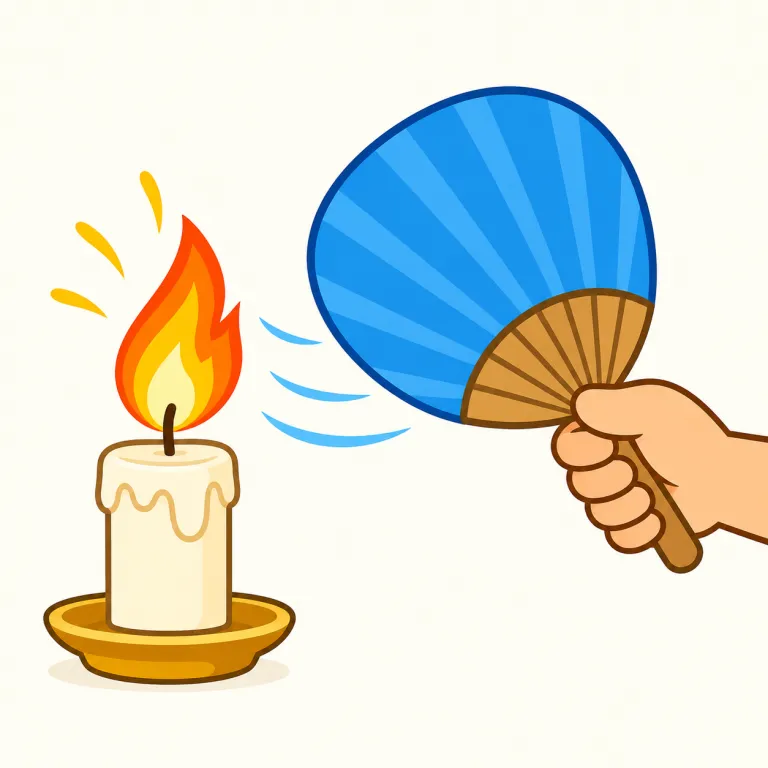
煽る
解説 Definition
fanning は fan の現在分詞・動名詞で、ここでは炎や不安、怒り、対立などを煽り、勢いを強めたり広げたりすることを表します。
Fanning is the present participle or gerund of “fan.” In this sense, it describes causing a fire, fear, anger, conflict, or another intense condition to grow stronger or spread further.
使い方 Usage
- fanning fear、fanning anger、fanning conflict のように、強める感情や対立を目的語に置きます。 Place the feeling or conflict being intensified after fanning, as in fanning fear, fanning anger, and fanning conflict.
- fanning the flames は「炎を煽る」。風などによって火の勢いが増す場面で使います。 Fanning the flames describes making flames stronger, for example through the action of wind.
覚え方のコツ Memory Tip
fan の語末の n を重ねて -ing を付けると fanning になります。風が炎の勢いを増す場面から、不安や怒りをさらに強めるイメージへ結び付けましょう。n の音を二度読むわけではありません。
Double the final n of fan before adding -ing: fanning. Picture wind making flames stronger, then connect that image with intensifying fear or anger. The double n does not mean two separate n sounds.
例文
The rumor was fanning fear among the residents.
そのうわさは住民の不安を煽っていました。
His speech risked fanning anger in the crowd.
彼の演説は群衆の怒りを煽るおそれがありました。
Strong winds were fanning the flames across the dry grass.
強い風が炎を煽り、乾いた草地に広げていました。
fanning の類義語・関連語
fanning の語源・成り立ち Etymology
fanning は fan の現在分詞。fan は古英語 fann(穀物をあおって選る道具)にさかのぼり、ラテン語 vannus に通じます。『風を送って散らす』感覚から『あおる』の意になり、関連語に fan, fanner があります。
Fanning is formed from the verb fan by doubling the final n and adding -ing. Fan comes through Old English fann, a tool used in winnowing grain, and is ultimately related to Latin vannus, “winnowing fan.” The action of creating airflow produced the verb meaning “to blow upon.” From the physical idea of making a fire burn more strongly developed the figurative use for intensifying emotions, hostility, or unrest.
同じレベルの語彙をもっと
外部辞書で調べる
この英単語をクイズで覚えよう