意味一覧 (4件)
どたばた喜劇
解説 Definition
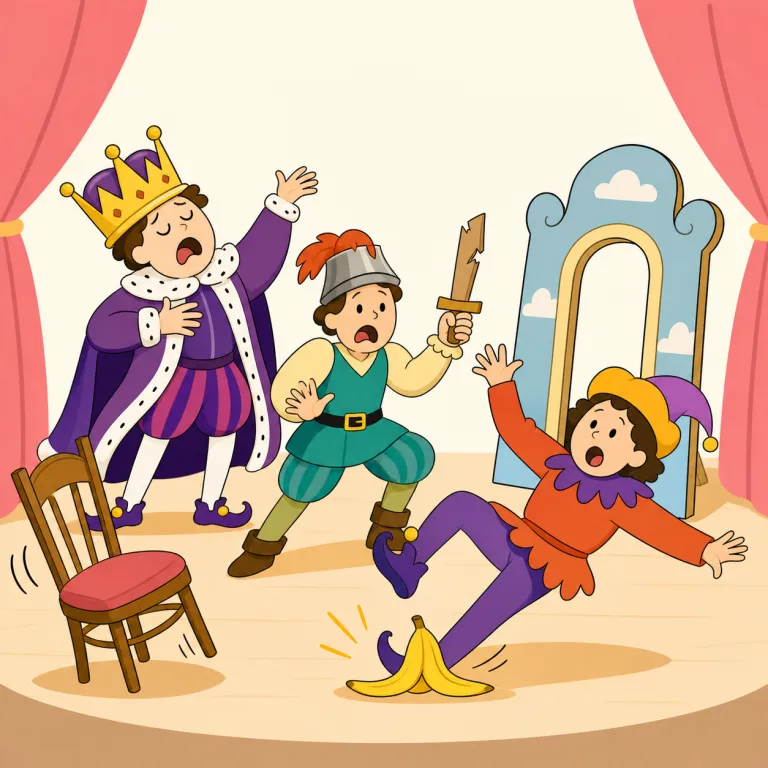
演劇や文学で、あり得ない偶然や取り違えを重ねて笑わせる喜劇を指す。大げさな動き、すれ違い、急展開などで観客を笑わせる形式で、上品な機知よりも、どたばたした可笑しさを前面に出す。舞台作品のジャンル名として言うことが多い。
A farce is a type of comedy, especially in theater or literature, that makes people laugh through unlikely accidents, mistaken identities, fast changes, and exaggerated actions. It focuses more on noisy, physical, chaotic humor than on clever or elegant wit. The word can also be used for a situation that should be serious but becomes so absurd that it seems like a ridiculous joke.
覚え方のコツ Memory Tip
farce は comedy より批判的で、ただ面白いのでなく「まじめに進むはずのものが、ばかばかしい茶番になっている」感じで覚えると残りやすいです。The meeting was a farce. / The trial became a farce. のように、会議・裁判・選挙など本来重い場面と結びつけるのがコツ。force や first とは無関係なので混同注意。形容詞 farcical も一緒に覚えると、a farcical process の形で広げやすくなります。
Remember that farce is more critical than comedy. It often suggests that something meant to be serious has turned into a silly, absurd show. Link it with examples like The meeting was a farce or The trial became a farce. Do not confuse it with force, and learn farcical too, as in a farcical process.
例文
The play is a classic farce, full of mistaken identities and slammed doors.
その劇は、取り違えやドアの開け閉めが続く典型的などたばた喜劇だ。
What started as a serious debate turned into a complete farce.
まじめに始まった討論は、すっかり茶番のようなどたばた喜劇になってしまった。
Critics said the film mixed romance with farce to keep the audience laughing.
批評家たちは、その映画は恋愛物語にどたばた喜劇を混ぜて観客を笑わせていると言った。
笑劇
(意味 2)解説 Definition
farce は、誤解・取り違え・大げさな動きなどで笑わせる演劇や物語の形式を指します。舞台劇や映画の説明で、筋が速く展開し、現実味より滑稽さを重視する作品に使われます。
A farce is a type of comedy that makes people laugh through misunderstandings, mistaken identity, and exaggerated actions. It is often used for plays, movies, or stories with very fast events and unlikely situations. In a farce, being funny is usually more important than being realistic.
覚え方のコツ Memory Tip
farce は元々フランス語で詰め物を意味し、劇の合間に詰め込まれた滑稽な寸劇から笑劇になった語です。今は a complete farce や political farce のように、まじめな場面がばかげた茶番に見える時にも使います。comedy は広い喜劇、satire は批判が中心ですが、farce は誇張とドタバタで不条理に笑わせる点が核です。
Think of farce as something so silly that the whole scene feels wildly fake and exaggerated. The sound is close to "far," and in a farce, the story often goes far beyond normal reality. Use it for fast, ridiculous comedy with mix-ups and over-the-top action.
例文
The play is a farce full of mistaken identities and quick costume changes.
その劇は、人違いや素早い衣装替えに満ちた笑劇です。
What began as a serious meeting turned into a complete farce.
まじめに始まった会議は、すっかり笑劇のような事態になった。
Critics called the movie a farce because its plot was wild and delightfully absurd.
筋書きが荒唐無稽で愉快にばかばかしいとして、批評家たちはその映画を笑劇と呼んだ。
茶番劇
(意味 3)解説 Definition
この語は現実には起こりえないような滑稽で馬鹿げた出来事や状況を指します。誇張されたユーモアと混乱を通じて観客を笑わせる演劇のジャンルとしても使われます。真剣に扱うべき事柄が茶番化した状況を批判的に表現するときにも用いられます。
A farce is a situation or event that seems absurd, foolish, and not serious in the way it should be. It can also mean a type of comedy that uses exaggerated and silly actions. It is often used to criticize something that looks badly managed or dishonest.
覚え方のコツ Memory Tip
この farce は、演劇ジャンルとしての「笑劇」ではなく、まじめで公正に行われるべき出来事がばかばかしく見える「茶番劇」という批判的な意味です。The trial became a farce. や The election was a farce. のように、裁判・選挙・会議など本来きちんと進むべき場面と結びつけて覚えると定着します。comedy の単なる笑いより、失敗・不誠実さへの批判が強い点に注意しましょう。
Remember `farce` with serious situations that turn ridiculous: a meeting, trial, or election that becomes a joke. It is more critical than `comedy` because something that should be proper now looks foolish. Do not mix it up with `force` or `first`. Learn `farcical` too, as in `a farcical process`.
例文
The election turned into a complete farce when none of the candidates showed up.
候補者が誰も現れなかったため、選挙は完全な茶番劇となってしまいました。
The comedy play was a hilarious farce full of mistaken identities.
そのコメディ劇は、人物の取り違えに満ちた爆笑の茶番劇でした。
The trial became a farce when key evidence mysteriously disappeared.
重要な証拠が不思議にも消えてしまい、裁判は茶番劇と化しました。
ばかげた行為
(意味 4)解説 Definition
ばかげた状況や滑稽な出来事。特に、期待された結果とは異なり、失敗に終わる状況を指す。
例文
The political situation became a farce.
その政治状況は茶番と化した。
The trial turned into a farce.
その裁判は茶番と化した。
The whole event was a complete farce.
そのイベント全体は完全な茶番だった。
farce の語源・成り立ち Etymology
farce は古フランス語 farce から入り、語源はラテン語 farcire「詰め込む」です。中世劇では本筋のあいだに滑稽な小場面を「詰め物」のように差し込んだため、そこから「茶番劇」の意味になりました。関連語は farcical, farced。
Farce came into English from Old French farce, which goes back to Latin farcire, meaning "to stuff" or "to fill." In medieval drama, a short comic scene was "stuffed" between parts of a more serious play, and this later gave the word its modern meaning of a ridiculous comic play or a sham.
外部辞書で調べる
この単語を英単語クイズで覚えよう