fleshing
fleshing はTOEIC 860・TOEFL 80・IELTS 6.5レベルの英単語で、「脱肉」という意味があります。発音記号は /ˈflɛʃɪŋ/ です。
脱肉
解説 Definition
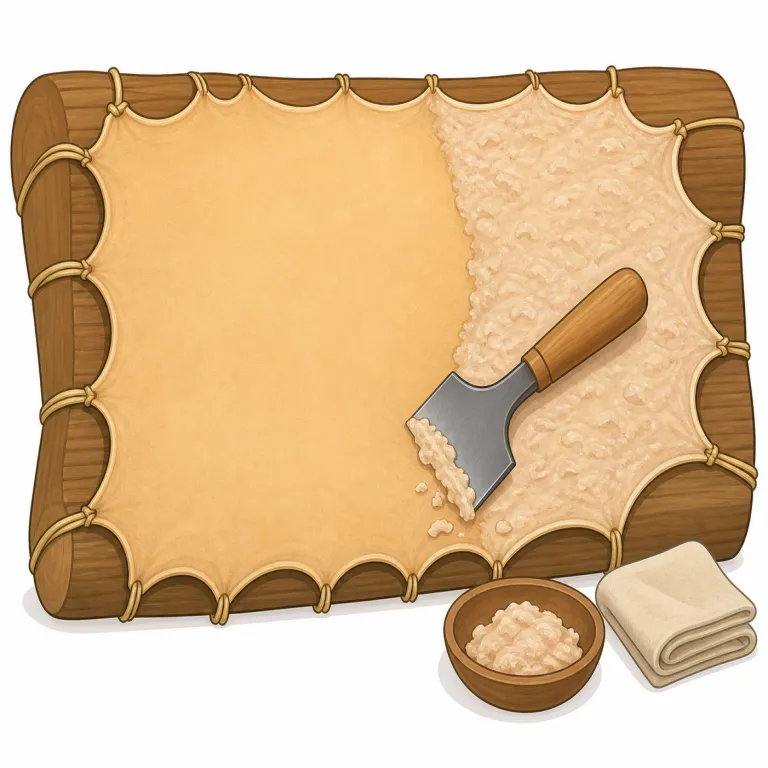
獣皮の裏側に残った肉や脂肪などを取り除く「脱肉」の工程。皮革加工などで、皮をその後の加工に備えて整える作業を指します。
Fleshing is the process of removing flesh and fat from an animal skin or hide. It is used in leather making, hunting, and similar technical work. The word refers to a practical step in preparing the skin for further use.
使い方 Usage
使い分け Common distinctions
- flesh out は説明などを「肉付けする」句動詞です。肉を取り除く工程名 fleshing とは区別します。 Flesh out is a phrasal verb meaning to add detail. Distinguish it from fleshing, the process of removing flesh from a hide.
覚え方のコツ Memory Tip
flesh(肉)を手掛かりに、「皮に残る肉を取り除く作業」と覚えましょう。washing や cleaning と同じく、-ing の形で作業・工程の名前になっています。
Use flesh as your memory hook: this is the work of removing flesh from a hide. Like washing or cleaning, the -ing form names a process.
例文
Fleshing is one of the first steps in leather processing.
脱肉は皮革加工の最初の工程の一つだ。
The tannery bought a new machine to speed up fleshing.
その皮なめし工場は脱肉を速めるために新しい機械を購入した。
fleshing の類義語・関連語
派生語
fleshing の語源・成り立ち Etymology
fleshing は flesh + -ing から成り、flesh は古英語 flæsc、さらにゲルマン祖語 *flaiską「肉」に由来します。語源の核はあくまで「肉」で、皮革加工ではその肉や脂肪を hide の裏から削ぎ落とす工程を指します。比喩的な「肉付けする」ではなく、この行ではなめし前の「脱肉」という専門的な作業名です。
Fleshing is formed from flesh plus the suffix -ing. Flesh comes from Old English flaesc, from a Germanic root meaning "meat" or "soft body tissue." From the literal idea of putting flesh on bones, English developed the figurative sense of adding substance or detail to something. Related words include fleshy and fleshly.
同じレベルの語彙をもっと
TOEIC 860の一覧へ →外部辞書で調べる
この英単語をクイズで覚えよう