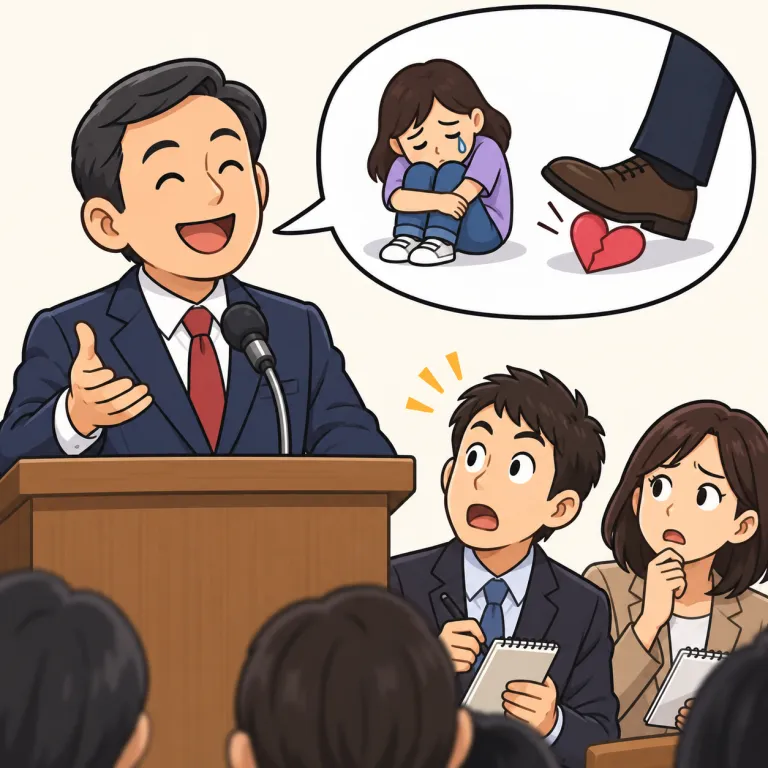
gaffe
gaffe は英検1級レベルの英単語で、「失言」という意味があります。発音記号は /ɡæf/ です。
失言
解説 Definition
社交的な場面や公の場で不適切に言った言葉、あるいはやった行為による失敗。外交的でない、配慮を欠いた発言や行動のこと。
A gaffe is an embarrassing mistake, especially something socially awkward or inappropriate that someone says or does. It is often used for public mistakes made in conversation, speeches, or formal situations. The word usually suggests carelessness rather than bad intention.
覚え方のコツ Memory Tip
gaffe は「公の場でやらかす失言・失策」というまとまりで覚える。単なる mistake より、内容の誤りそのものよりも、場や相手への配慮不足で空気を悪くする感じが強い。political gaffe, diplomatic gaffe の形でニュースに出やすいので、政治家や著名人が一言で炎上する場面と結びつけると残りやすい。error が広い一般語なら、gaffe は社交・発言面のまずさに寄る語。faux pas と近いが、gaffe のほうが報道で見かけやすい。
Remember `gaffe` as a public mistake that makes people feel awkward, especially something said badly. It is more specific than `mistake` because it often involves poor judgment in speech or social situations. Phrases like `political gaffe` and `diplomatic gaffe` are common, so news scenes are a useful memory hook.
例文
The politician made a gaffe during the press conference.
その政治家は記者会見で失言をした。
His gaffe about the sensitive topic caused controversy.
そのデリケートな話題に関する彼の失言は、物議を醸した。
She apologized for her social gaffe at the dinner party.
彼女はディナーパーティーでの社交上の失態を謝罪した。
gaffe の類義語・関連語
類義語
紛らわしい語
gaffe の語源・成り立ち Etymology
gaffe はフランス語 gaffe「鉤・ひっかけ」から入り、さらに南仏系語の gaf にさかのぼるとされる。gaff と同根で、「言葉や振る舞いが相手に引っかかってしまう」と考えると、失言や大失策の意味が腑に落ちる。
Gaffe came from French gaffe, which meant a hook or pole with a hook, and it is related to English gaff. The idea behind the later meaning is that a mistake in speech or behavior "catches" awkwardly on other people. From that image, the word developed into the sense of a social blunder or embarrassing slip.
同じレベルの語彙をもっと
英検1級の一覧へ →外部辞書で調べる
この英単語をクイズで覚えよう