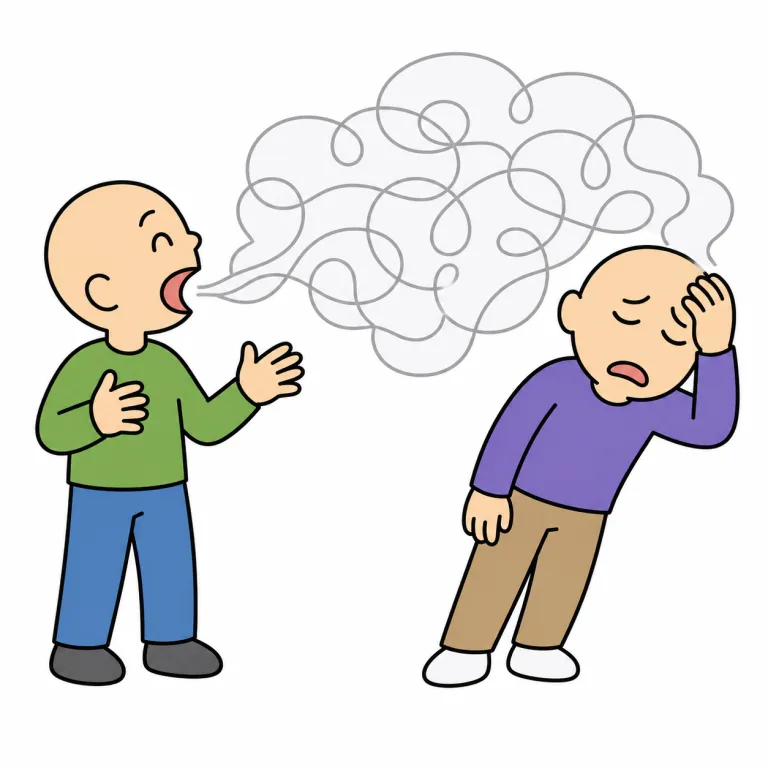
口答え、悪態
noun 名詞くだけた言い方で、人に向けられる生意気な口答えや無礼な発言を指す不可算名詞。give someone guff などの形で、相手に反抗的なことを言う意味になり、単なる中身のない話とは区別される。
くだらない話やナンセンスなこと。中身のない発言や馬鹿げた意見。
Guff means nonsense, silly talk, or something not worth taking seriously. It is an informal word and is often used in a dismissive way.
guff は「nonsense」「rubbish」と同じ方向のくだけた言い方として覚えると定着しやすい語。まじめに誤りを指摘するより、「そんなくだらない話はやめて」という軽い切り捨てに向く。特に talk guff, a load of guff, don’t take any guff などの形で見やすい。上品な語ではなく、会話で相手の発言を中身のないものとして退ける響きがある。guffaw(笑い声)とは形が少し似ていても別語なので混同しない。
Treat guff as an informal cousin of nonsense or rubbish. It often appears in phrases like a load of guff or talk guff, which help fix its tone in memory. Do not mix it up with guffaw, which is a different word about loud laughter.
I've had enough of this guff — just give me the facts.
こんなたわごとはもう十分だ——事実だけを教えてくれ。
The politician's speech was full of guff and lacked any real substance.
その政治家の演説はたわごとだらけで、実質的な中身がなかった。
Don't listen to that guff about the project being impossible.
そのプロジェクトが不可能だというくだらない話を聞くな。
文脈によって、次の意味でも使われます。
くだけた言い方で、人に向けられる生意気な口答えや無礼な発言を指す不可算名詞。give someone guff などの形で、相手に反抗的なことを言う意味になり、単なる中身のない話とは区別される。
guff は19世紀英語で、語源は擬音的とされる。もとは「ぷっと出る息・一吹き」の意があり、そこから中身のない話を hot air のように見て「たわごと」になった。はっきりした接辞分解や同根語は乏しい。
Guff appeared in 19th-century English and is usually treated as imitative in origin, meaning it probably came from a sound-like form rather than a clear older root. Early senses were connected with a puff or burst of breath. From there, the meaning shifted to empty talk, like mere "hot air." It has no certain root family.
この英単語をクイズで覚えよう