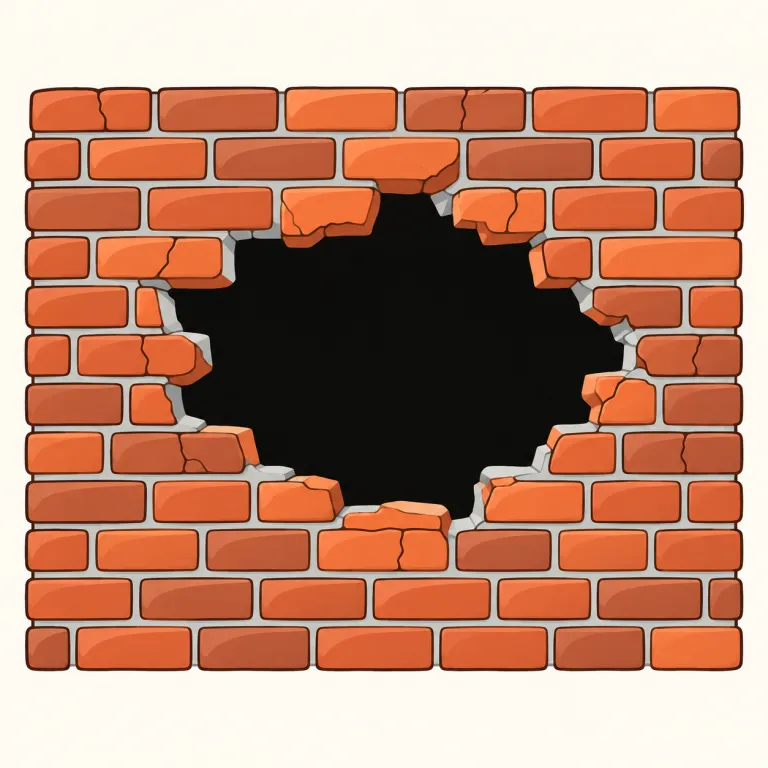
ぽっかりと
解説 Definition
gaping は gape(大きく開く、口をぽかんと開ける)の現在分詞で、形容詞として「ぽっかり開いた」という意味です。穴やすき間、傷口などが大きく開いている様子を表します。
Gaping describes a hole, crack, wound, or other opening that is unusually wide, large, and clearly visible. It often emphasizes the alarming, striking, or difficult-to-ignore appearance of the open space.
覚え方のコツ Memory Tip
gaping は gape「口を大きく開ける」の語末の e を落として -ing を付けた形で、/ˈɡeɪpɪŋ/ と発音します。a gaping hole/crack/wound のように、口がぽかんと開いた姿を穴・亀裂・傷口に重ね、「大きく開いて目立つ状態」を表します。単なる open より、広さや深刻さが視覚的に強調される語です。gap は似ていますが、直接の原形は gape です。
Begin with gape, meaning to open the mouth wide or stare with the mouth open. Drop the final e and add -ing to form gaping, pronounced “GAY-ping.” Transfer the image of a wide-open mouth to a wall, wound, or crack: a gaping hole looks as if the surface has opened its mouth. This visual picture explains why gaping is stronger than merely open; it suggests an opening that is conspicuously large and perhaps alarming. Gap is related in sound and meaning, but the direct base verb of gaping is gape.
例文
There was a gaping hole in the old wall.
古い壁にはぽっかりと穴が開いていました。
A gaping crack appeared after the earthquake.
地震の後、ぽっかりと大きな亀裂が現れました。
They covered the gaping space with a wooden board.
彼らはぽっかり空いた場所を木の板でふさぎました。
gaping の類義語・関連語
gaping の語源・成り立ち Etymology
gaping は古ノルド語 gapa「口を大きく開ける・ぽかんと見る」が入った英語 gape に、進行・状態を表す -ing が付いた語です。関連語は gap, agape。『口があいたまま』という原像から、穴や裂け目がぽっかり開いた感じになります。
Gaping is the -ing form of gape, created by dropping the final e before adding -ing. Gape comes from Old Norse gapa, “to open the mouth wide” or “gape,” and has Germanic relatives. The bodily image of an open mouth was extended to large holes, cracks, wounds, and spaces. Gap is historically related, while agape in the sense “with the mouth wide open” preserves a closely connected image.
同じレベルの語彙をもっと
外部辞書で調べる
この英単語をクイズで覚えよう