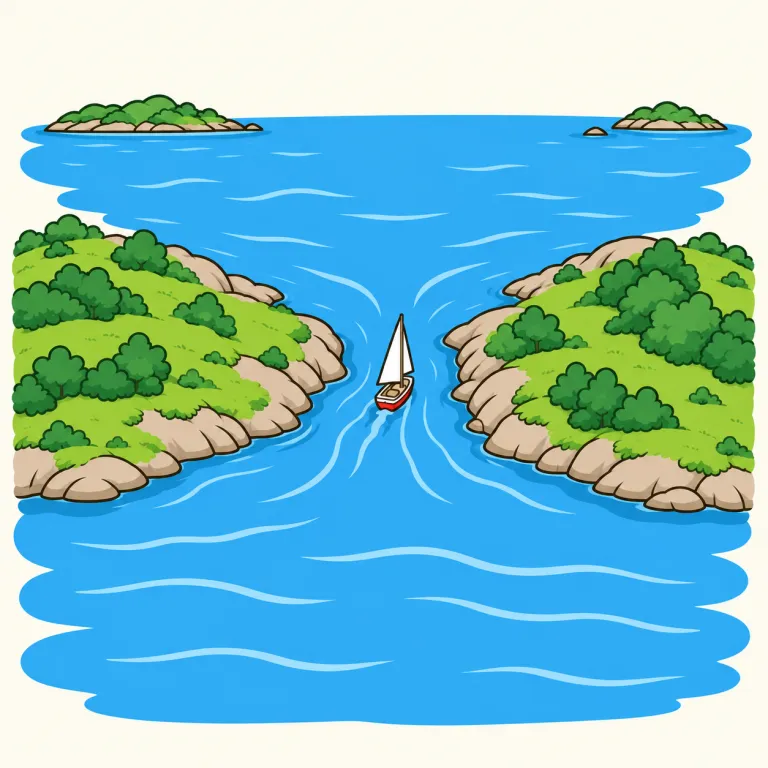
狭い水路、海峡
解説 Definition
(地理・海事)陸地や浅瀬などの間を通り、より大きな水域を結ぶ狭い天然の水路・海峡を指します。主に海図、地理的名称、海事に関する文章で使われる、まれな語です。
A gat is a narrow natural channel or passage of water, especially one running between land areas or connecting larger bodies of water. The term occurs chiefly in geographical names and nautical contexts.
覚え方のコツ Memory Tip
gat は海図や地名で使われる「狭い水路・海峡」で、日常語より地理用語として覚える。語源的に gate「通り道」と結び付き、陸地の切れ目が船の通路になる図を思い浮かべるとよい。地名の Kattegat にも見られるが、俗語の gat「銃」とは別語義なので文脈で区別する。
Remember gat as a geographical “gateway” for water. It refers to a narrow channel through which water or vessels can pass, often between islands, sandbanks, or larger land areas. The relationship with gate makes the image practical: an opening in the landscape functions as a route. You are most likely to meet this sense on maps, in nautical writing, or inside place names such as Kattegat. Context matters because gat has also been used as slang for a gun, a separate sense unrelated to the waterway described here.
例文
The boat passed through the gat between the islands.
その船は島々の間の狭い水路を通過しました。
Strong currents flow through this gat at high tide.
満潮時には、この狭い水路に強い潮流が流れます。
The old chart shows a gat connecting the bay to the open sea.
その古い海図には、湾と外海を結ぶ狭い水路が示されています。
gat の類義語・関連語
gat の語源・成り立ち Etymology
古英語「geat」や低地ドイツ語「gat」に由来し、元来「開かれた狭い水路」を指します。接辞はなく、ゲルマン語系の「開口部」が語根です。同語根の「gate(門・通路)」と比べれば、「地形の切れ目が通り道になる」という成り立ちが明確で、海図上の意味も納得できます。
In the geographical sense, gat comes from a Germanic word for an opening, passage, or channel, represented by Low German and Dutch gat. It is related to Old English geat and to modern English gate. The central idea is an opening that permits passage, which naturally developed into the nautical meaning of a narrow waterway between land masses, shoals, or other geographical features. The word survives especially in regional usage and place names.
同じレベルの語彙をもっと
外部辞書で調べる
この英単語をクイズで覚えよう