歯茎でかむ
verb 動詞gum の過去形・過去分詞として、歯のない人や乳児が食べ物などを歯茎でかんだことを表します。gummed the bread のように目的語を取り、「のりを付けた」という意味とは文脈で区別されます。
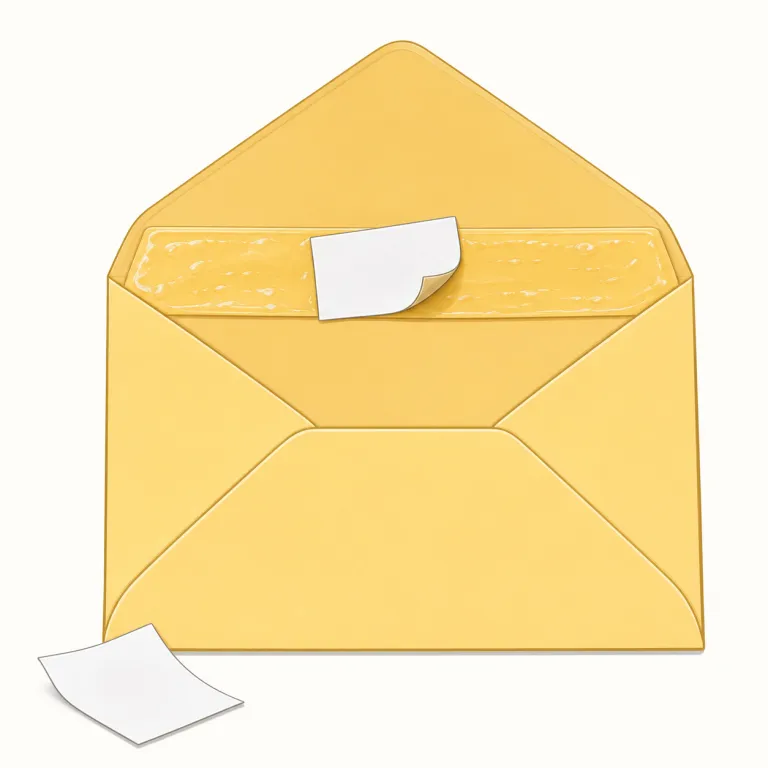
gummed はTOEIC 860・TOEFL 80・IELTS 6.5レベルの英単語で、「のり付きの、糊付けされた」という意味があります。発音記号は /ˈɡʌmd/ です。
紙やラベル、テープなどの表面にのりや接着剤が塗られ、貼り付けられる状態を表す形容詞です。事務用品や包装資材の説明でよく使われます。
Gummed means covered with gum or adhesive, or made so it can stick when wet or pressed. It is often used for things like labels, envelopes, or tape. In this sense, it refers to a sticky coating rather than chewing gum.
gum の「粘着性のあるもの・接着剤」という意味と、-ed の「〜された状態」を結び付けましょう。gummed は「接着剤が付いた状態」と覚えられます。
Connect gum, meaning a sticky substance or adhesive, with -ed, marking a resulting state. Think of gummed as having adhesive on it.
The gummed labels adhered firmly to the shipping packages.
のり付きラベルは発送用の荷物にしっかり貼り付いた。
She used gummed tape to securely seal the envelope.
彼女は封筒をしっかり封じるために、のり付きテープを使った。
文脈によって、次の意味でも使われます。
gum の過去形・過去分詞として、歯のない人や乳児が食べ物などを歯茎でかんだことを表します。gummed the bread のように目的語を取り、「のりを付けた」という意味とは文脈で区別されます。
gummed は gum + -ed で、「ガムを付けた」「ガム状になった」という意味です。gum はラテン語 gummi、さらにギリシャ語 kommi「樹液のゴム」にさかのぼり、gummy や gum arabic と同根なので、べたつく天然樹脂の質感が語の中心だと見えてきます。
Gummed is formed from gum with the ending -ed. Gum came into English through Latin gummi and Greek kommi, words for sticky plant resin. Related words like gummy and gum arabic show the same old idea of a natural, sticky substance.
この英単語をクイズで覚えよう