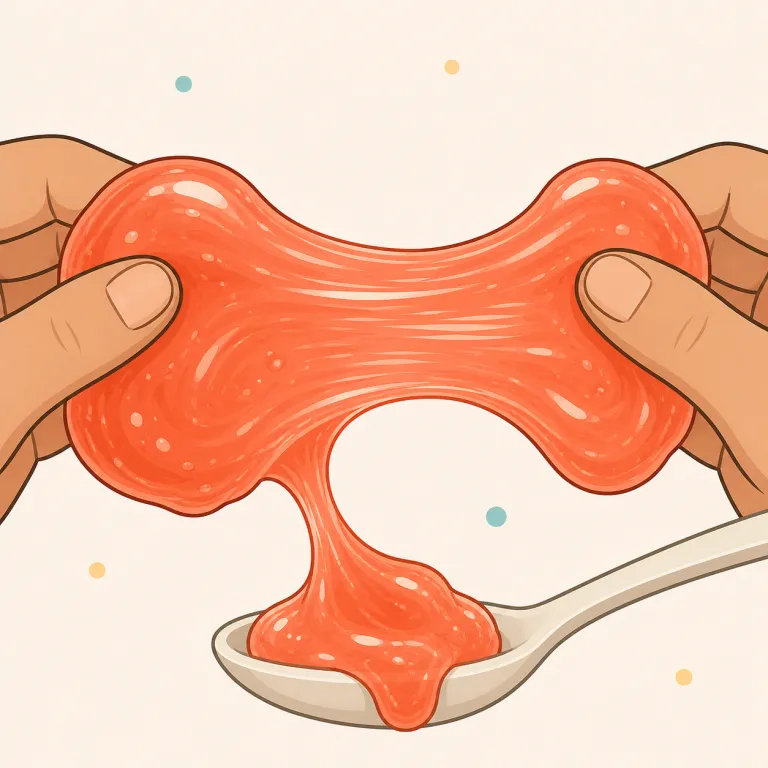
ねばり気のある、もちっとした
解説 Definition
食べ物や物質がねばり気をもち、少しべたついたり弾力があったりする様子を表す形容詞。キャンディーなら噛み応えのあるもちっとした食感、のりや残留物なら粘着性があって手や物にくっつきやすい状態を指す。
Gummy describes something that is soft, sticky, and slightly chewy. It is often used for food, especially sweets or foods with a thick texture. Depending on the context, it can be either a positive or negative description.
覚え方のコツ Memory Tip
gum(ガム、ゴム質)に形容詞の -y が付いて「ガムっぽい」と捉えると覚えやすい語。まず gummy candy / gummy bears を思い浮かべると、ただ sticky「べたつく」だけでなく、chewy「もちっと噛み応えがある」感じまで含むと整理しやすい。液体や表面がぺたぺた付くなら sticky、弾力のあるねばりやゼリー感のある質感なら gummy。rubbery は「ゴムっぽく不自然に硬い」ので別物。食感、接着剤、残留物の説明で出やすい。
Build it from "gum" plus "-y": something gum-like. "Gummy" suggests a chewy, soft, slightly sticky texture, like gummy candy, not just a wet sticky surface. Compare it with "sticky" for surfaces and "rubbery" for something unnaturally hard and elastic.
例文
The gummy texture of the candy delighted the children.
そのキャンディーのもちっとした食感は、子どもたちを喜ばせた。
The residue left a gummy coating on her hands.
その残留物は、彼女の手にべたつく膜を残した。
The gummy substance made it difficult to remove the sticker.
そのねばり気のある物質のせいで、ステッカーをはがすのが難しかった。
gummy の類義語・関連語
gummy の語源・成り立ち Etymology
gummy は gum「ゴム・ねばつく樹脂」に形容詞語尾 -y が付いた語で、gum は古フランス語を経てラテン語 gummi、さらにギリシャ語 kommi にさかのぼります。gum や gumdrop と同じ核をもち、「ゴム質を帯びた」がそのまま「ねばねばした」になった語です。
Gummy comes from gum plus the adjective ending -y. Gum came through Old French and Latin from Greek kommi, referring to sticky plant resin. From the idea of something containing gum, gummy came to mean sticky or glue-like. Related words include gum and gumdrop.
同じレベルの英単語をもっと
外部辞書で調べる
この単語を英単語クイズで覚えよう