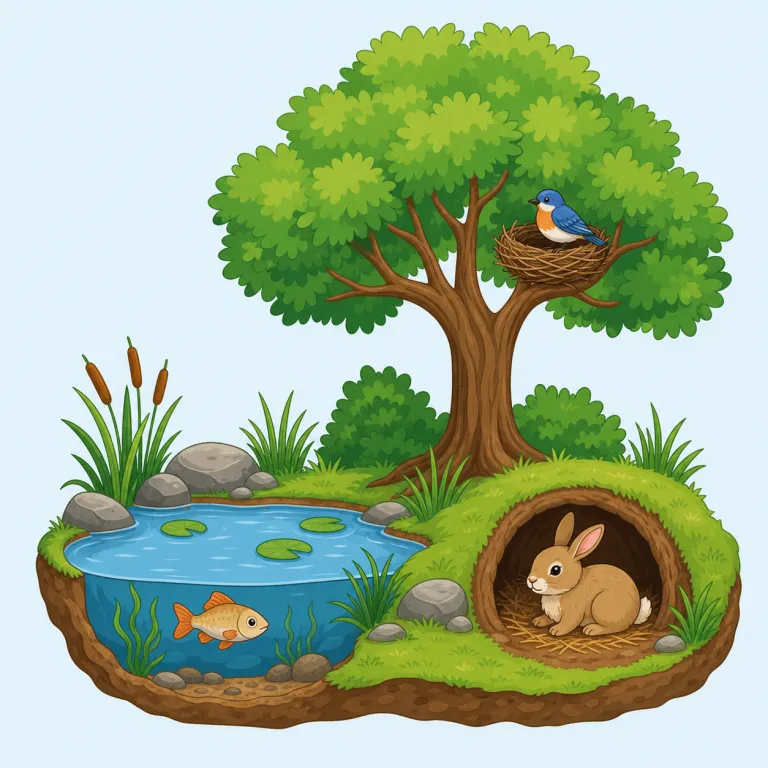
habitat
habitat は英検準1級・TOEFL 60・IELTS 5.5レベルの英単語で、「生息地」という意味があります。発音記号は /ˈhæbɪˌtæt/ です。
生息地
解説 Definition
動物や植物が自然に生息したり、生存したりする環境や場所です。生物が生活するために必要な条件が揃っている地域を指します。
A habitat is the natural place where an animal or plant normally lives and grows. It includes the conditions and surroundings the living thing needs to survive. The word is common in biology and environmental topics.
覚え方のコツ Memory Tip
habitat は inhabit(住む)や cohabit(同居する)を知っていると覚えやすい語で、核は『生き物がそこに住める場所』。ただの場所ではなく、食べ物・水・気候など、生存に必要な条件がそろった場まで含むのが重要です。natural habitat, wildlife habitat, habitat loss の形で頻出。home は個体の家、environment はもっと広い環境で、habitat は種や生物集団に合った生息地、という違いで整理すると残りやすいです。
Connect it with "inhabit," which also has the idea of living in a place. A habitat is not just a spot on a map; it is a place with the right conditions for living things. Useful word pairs like "natural habitat" and "habitat loss" make the word easier to remember.
例文
The forest provides an ideal habitat for many species.
その森は多くの種にとって理想的な生息地です。
Climate change is destroying the habitat of polar bears.
気候変動はホッキョクグマの生息地を破壊しています。
Scientists work to protect endangered animals in their natural habitat.
科学者たちは絶滅危惧種を自然の生息地で保護することに取り組んでいます。
habitat の類義語・関連語
habitat の語源・成り立ち Etymology
habitat はラテン語 habitat「彼/それが住む」から来た語で、動詞 habitare「住む・居住する」の形がそのまま名詞化した。もとは「そこを住まいにしている場所」という感覚で、inhabit や cohabit と同じく“住む”の核が見える。
Habitat comes from Latin habitat, meaning "he/she/it lives," from habitare, "to live" or "dwell." It began as a Latin word used in descriptions of where a plant or animal lives, and later became a noun for that living place itself. The core idea of dwelling is also seen in related words like inhabit and cohabit.
同じレベルの語彙をもっと
英検準1級の一覧へ →外部辞書で調べる
この英単語をクイズで覚えよう
この意味を学べる単語帳
habitat の収録語義を確認して、まとめて学べる単語帳を選べます。
-
収録語義:生息地
作成者:金子竜平