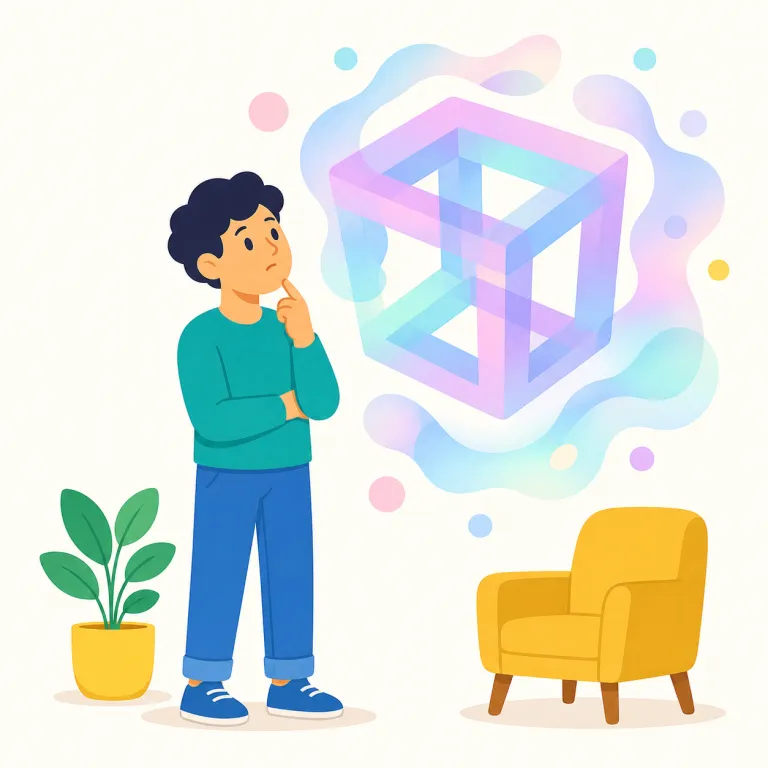
hallucination
hallucination は英検1級レベルの英単語で、「幻覚」という意味があります。発音記号は /həˌluːsəˈneɪʃən/ です。
幻覚
解説 Definition
実在しない光景や感覚を知覚すること、または意識状態の異常によって生じる知覚現象です。精神疾患や薬物の影響で生じることがあります。
A hallucination is an experience of seeing, hearing, or feeling something that is not actually there. It is often discussed in medicine, psychology, or situations involving illness, drugs, or extreme stress. The word usually refers to a serious or unusual mental or physical condition.
覚え方のコツ Memory Tip
まず語形で覚えると定着しやすい。hallucinate が動詞「幻覚を見る」、-ation が付くと名詞化して hallucination「幻覚」になる。同じ並びの pronounce/pronunciation の感覚に近い。意味は illusion と混同しやすいが、illusion は実物の見え方の錯覚、hallucination は実在しないものを見聞きすること。visual/auditory hallucinations, experience hallucinations, suffer from hallucinations などの形でまとめて覚えると使う場面まで思い出しやすい。
Remember the word family: `hallucinate` is the verb, and `hallucination` is the noun, like `pronounce` and `pronunciation`. To avoid confusion, compare it with `illusion`: an illusion changes how something real looks, but a hallucination is about something not really there. Common pairs like `visual hallucinations` and `auditory hallucinations` make it easier to fix in memory.
例文
The patient reported experiencing vivid hallucinations.
その患者は鮮明な幻覚があると訴えました。
Hallucinations can be a symptom of serious mental illness.
幻覚は重篤な精神疾患の症状となり得ます。
High fever sometimes causes hallucinations in children.
高熱は時々子どもに幻覚を引き起こします。
hallucination の類義語・関連語
hallucination の語源・成り立ち Etymology
hallucination はラテン語 hallucinari(心がさまよう、思い違いをする)に由来し、名詞語尾 -ation が付いた形。hallucinate や hallucinatory も同根で、『感覚や意識が道を外れる』という原義が『幻覚』の意味をよく説明している。
Hallucination comes from Latin hallucinari, meaning "to wander in mind" or "to be mistaken," with the noun ending -ation added later. Related words include hallucinate and hallucinatory. The original sense of mental wandering developed into the idea of perceptions that do not match reality.
同じレベルの英単語をもっと
英検1級の一覧へ →外部辞書で調べる
この単語を英単語クイズで覚えよう