同族列の化合物
noun 名詞有機化学で、同じ官能基と一般式を持つ同族列に属する化合物の一つ。隣り合う homologue は通常CH2一個分だけ組成が異なり、物理的性質が段階的に変化することを述べる際に使う。
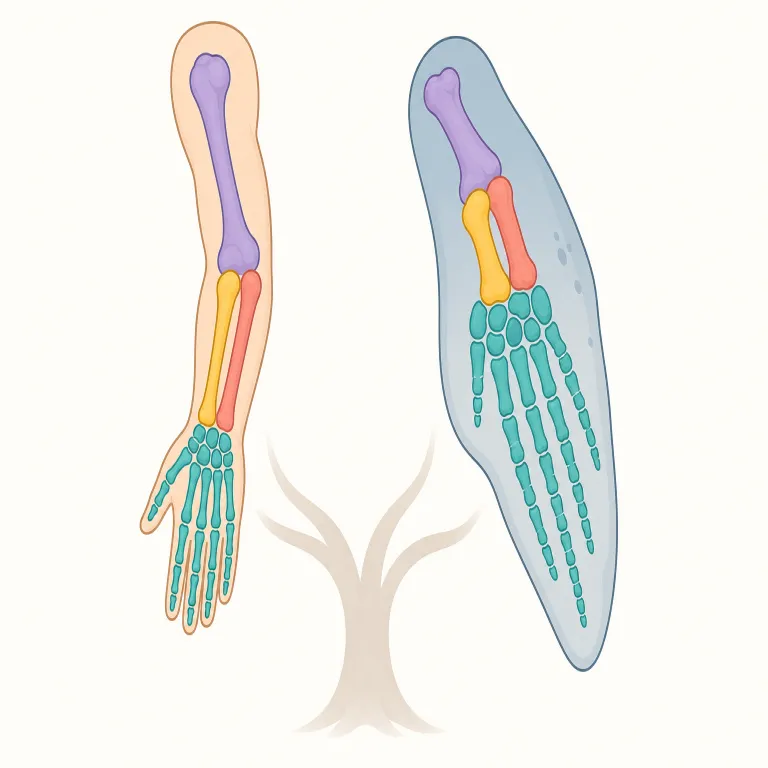
異なる種の動物や植物において、共通の進化的起源を持つ対応する器官や構造。進化的な関連性を示す証拠となる。
A homologue is something that corresponds closely to something else, especially in science. It is often used for a similar structure, gene, or chemical compound that has a related form or origin. This is a technical word, so it is mostly used in biology, chemistry, and related fields.
homo- は homogeneous や homonym にも出る「同じ」の感覚。まず homology, homologous と同じ語群で固め、homologue はその名詞版で「相同なものそのもの」と押さえると残りやすいです。生物では『形や働きが似ている』だけでは弱く、『共通の祖先に由来して対応する』のが核心。analogue は機能が似るだけで起源は別、という対比を置くと混同しにくく、X is a homologue of Y の形でも覚えやすいです。
Use the prefix `homo-`, which often means "same," as in `homogeneous`. Then connect it with the word family `homology` and `homologous`; `homologue` is the noun for the matching thing itself. To avoid confusion, pair it against `analogue`: a `homologue` shares origin, not just a similar function.
The human arm and the bat's wing are homologues, showing common ancestry.
人間の腕とコウモリの翼は相同器官であり、共通の祖先を示している。
Scientists study homologues across different species to understand evolution.
科学者は異なる種の相同器官を研究して進化を理解する。
Homologues between different species provide evidence for evolutionary relationships.
異なる種の相同体は、進化的な類縁関係を示す証拠となる。
文脈によって、次の意味でも使われます。
有機化学で、同じ官能基と一般式を持つ同族列に属する化合物の一つ。隣り合う homologue は通常CH2一個分だけ組成が異なり、物理的性質が段階的に変化することを述べる際に使う。
homologue はフランス語 homologue に由来し、さらにギリシャ語 homologos にさかのぼる。homo-「同じ」+ logos「関係・ことば」から成り、「同じ対応関係にあるもの」という発想で、生物や化学の「相同体」を表す。関連語は homology, homologous。
Homologue came into English from French homologue, which goes back to Greek homologos. It is made from homo- meaning "same" and logos, here meaning something like "relation" or "account." The idea was of things matching in structure or correspondence, which led to its scientific use; related words include homology and homologous.
この英単語をクイズで覚えよう