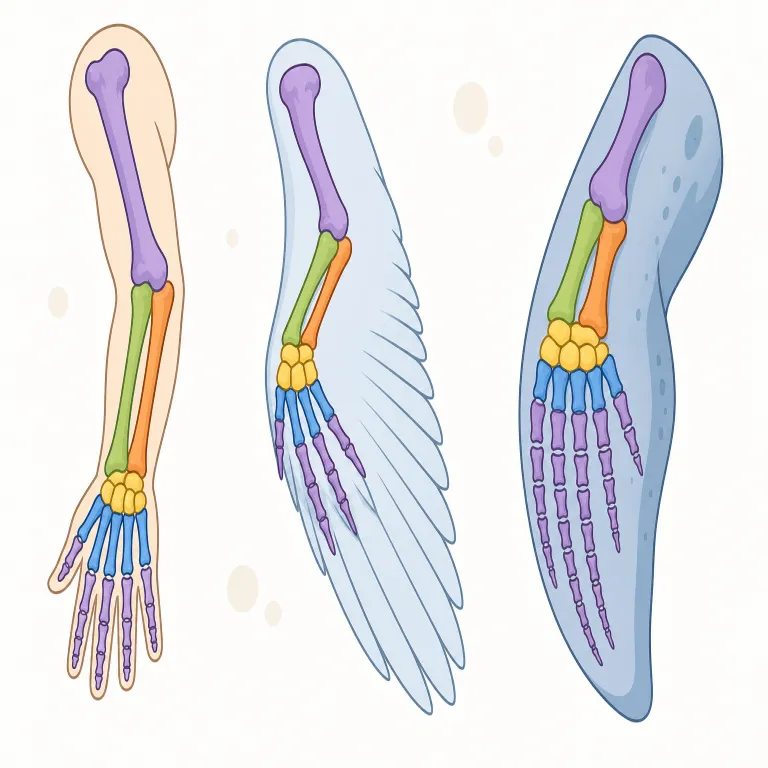
相同な
解説 Definition
この語は、生物学において進化的に共通の起源を持つ器官や構造を指します。異なる生物種で似た形をしていても、それが祖先の遺伝的背景を共有している場合に相同と呼びます。見た目だけでなく系統的なつながりを意識する際に使う表現です。
If two things are homologous, they match each other because they come from the same origin or have a similar basic structure. This word is used mainly in biology, anatomy, and related sciences. It often describes body parts, genes, or features in different species that correspond to each other.
覚え方のコツ Memory Tip
homo- は homogeneous などでも見かける「同じ」。この語もまず「同じ側の語だ」と置くと入りやすいです。生物では analogous と対比で覚えるのが最重要で、analogous は働きが似るだけ、homologous は起源が同じ。つまり「見た目の類似」ではなく「祖先や設計図の共通性」に注目する語です。homologous structures, homologous chromosomes の形でよく出るので、『別の姿でも元は同じ系統』という場面と一緒に固定すると残りやすいです。
Start with `homo-`, the same part you see in `homogeneous`, meaning "same." To remember this word, pair it with `analogous`: analogous things only have a similar job, but homologous things come from the same origin. Think of the common phrase `homologous structures` and remember: different form, same family line.
例文
The wings of birds and the arms of humans are homologous structures.
鳥の翼と人間の腕は相同な構造です。
Scientists study homologous genes to understand evolution.
科学者は進化を理解するために相同な遺伝子を研究します。
The whale's flipper and the horse's leg are homologous organs.
クジラのひれと馬の脚は相同な器官です。
homologous の類義語・関連語
類義語
対義語
homologous の語源・成り立ち Etymology
ギリシャ語 homologos(対応する)が新ラテン語・フランス語を経て英語に入った語です。homo-「同じ」+ logos「比・関係・言葉」から成り、もともと「同じ対応関係をもつ」という感覚なので、『相同な』の意味が納得できます。関連語は homology, logic。
Homologous came into English through French and New Latin, from Greek homologos, meaning "agreeing" or "corresponding." It is built from homo- "same" and logos, which could mean "relation," "proportion," or "word." The idea developed into "having the same relation or structure," especially in science. Related English words include homology and logic.
同じレベルの語彙をもっと
外部辞書で調べる
この英単語をクイズで覚えよう