同音異義語
解説 Definition
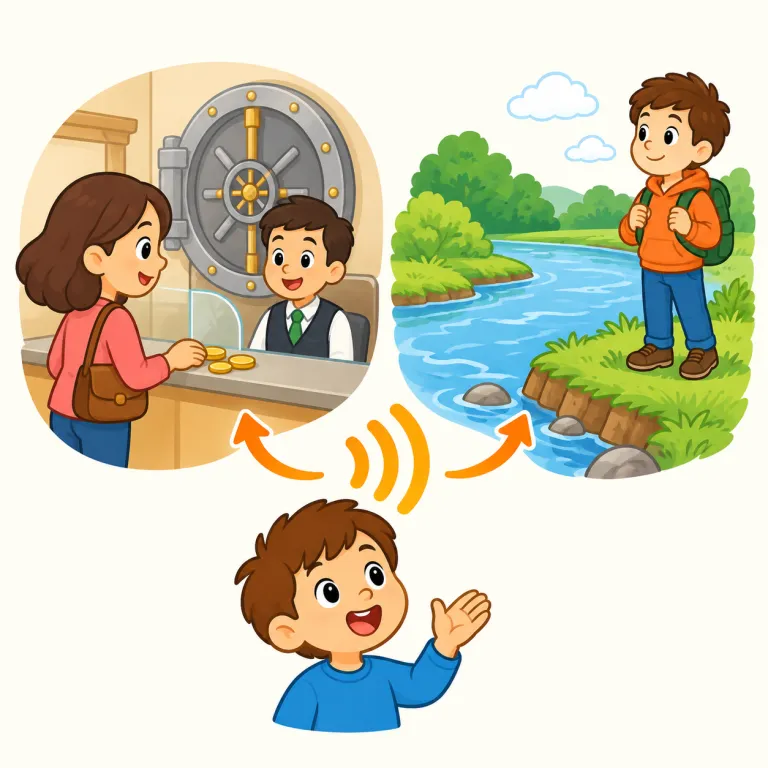
同じ綴りまたは音を持つが異なる意味の言葉。例えば、英語の「bank」は川の土手と金融機関の二つの意味をもつ。
A homonym is a word that has the same form as another word but a different meaning. In many cases, homonyms have the same spelling, the same pronunciation, or both. This term is used in grammar and language study.
覚え方のコツ Memory Tip
homonym はまず synonym, antonym などの -onym 語を並べて、「-onym は語の呼び名・種類に関係する」とまとめて覚えると残りやすい。さらに homo- は「同じ」なので、「同じ形・同じ音の側に寄る語」とつかむと意味に入りやすい。学習上は homophone(音だけ同じ)や homograph(綴りだけ同じ)との違いをセットで整理するのが有効。homonym はそれらを広めにまとめる語として出ることもあるので、例を見るときは『音が同じのか、綴りも同じなのか』を毎回確認すると混同しにくい。
Put it with other `-onym` words like `synonym` and `antonym`, so you remember that this ending is about kinds of words or names. Then notice `homo-`, meaning "same," which gives the idea of words that match in sound or form. It is also useful to compare it with `homophone` and `homograph`, because learners often mix them up.
例文
In English, the word 'bank' is a homonym meaning both a river's edge and a financial institution.
英語では、「bank」という言葉は川の土手と金融機関の両方を意味する同音異義語である。
The Japanese language is rich with homonyms that can create amusing wordplay.
日本語には、面白い言葉遊びを生み出す同音異義語が豊富にある。
Homonyms often cause confusion in language translation and interpretation.
同音異義語は、翻訳や解釈で混乱を引き起こすことが多い。
homonym の類義語・関連語
紛らわしい語
homonym の語源・成り立ち Etymology
homonym はギリシャ語 homo-「同じ」と onyma/onoma「名前」が合わさった語で、「同じ名をもつもの」が原義です。そこから、音や形が同じでも意味が異なる語を指すようになりました。synonym や anonymous も -onym「名」の仲間です。
"Homonym" comes from Greek homo-, meaning "same," and onyma/onoma, meaning "name." Its original sense was "having the same name." From that, it came to mean words that share the same form or sound but have different meanings. Related words include synonym and anonymous.
同じレベルの語彙をもっと
外部辞書で調べる
この英単語をクイズで覚えよう