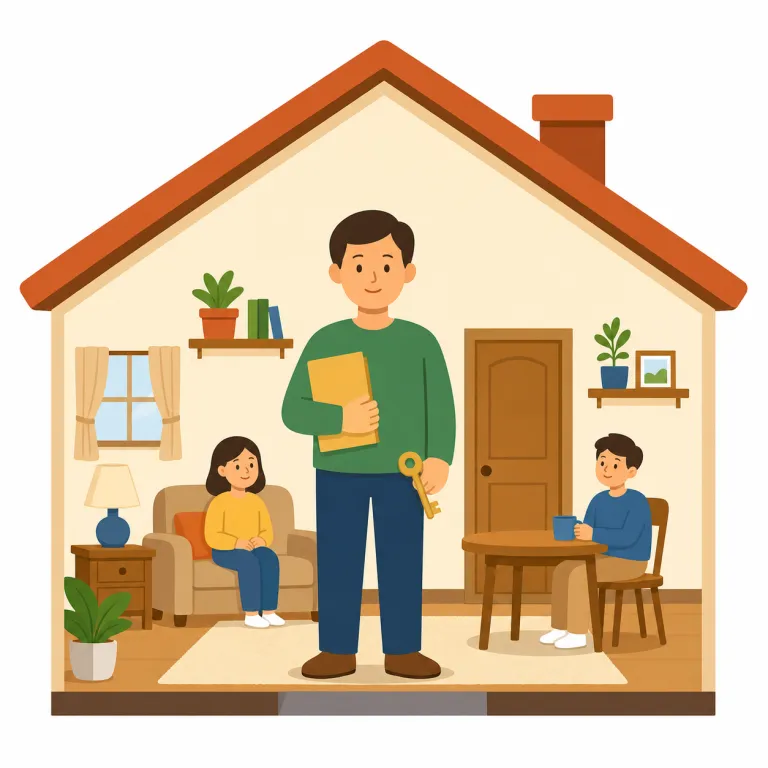
householder
意味一覧 (3件)
世帯主
解説 Definition
家族や世帯の主人で、その家を統括する責任を持つ人です。多くの場合、経済的な決定権を持っています。
A householder is a person who owns or manages a home or household. The word is often used in formal, legal, or official contexts, such as forms, rules, or public notices. It focuses on responsibility for the home rather than family role.
覚え方のコツ Memory Tip
この意味では householder を「世帯を代表して責任を持つ人」として覚えます。house + holder は単に家に住む人にもなりますが、ここでは household(世帯)を hold する人、つまり支払い・手続き・調査票などでその家族や世帯を代表する人という発想です。head of household と近く、行政文書・税・保険・国勢調査のような場面で出やすい語です。基本義の「家の住人」と混同せず、責任や代表性があるかに注目すると区別できます。
Split it into `house` + `holder`: a person who "holds" responsibility for the house. Think of other words like `ticket holder` or `shareholder`, where `holder` means the responsible person. That helps you remember it is more formal than just `resident`.
例文
The householder is responsible for paying property taxes and maintenance costs.
世帯主は不動産税と維持費の支払いに責任があります。
As the householder, she made all the decisions regarding home renovations.
世帯主として、彼女は家のリノベーションに関するすべての決定を下しました。
The census asks for information about the householder and family members.
国勢調査は世帯主と家族成員に関する情報を求めます。
家の住人
(意味 2)解説 Definition
householder は、ある家に住んでいる人、またはその家を占有している人を指すやや形式的な名詞です。日常会話の resident より書き言葉・公的文書寄りで、家を利用し暮らしている人という点に焦点があります。
A householder is a person who lives in a house or occupies it. The word is a little formal and is often used in written notices, surveys, rules, and official documents rather than everyday conversation. It focuses on someone connected with a particular home as a place where they live. In this sense, it can refer to the people living in the house in general, not only the main person in the family.
覚え方のコツ Memory Tip
house + holder と分けると、「家を hold している人」、つまりその家を使い住んでいる人という発想で覚えられます。ticket holder が「チケットを持つ人」、account holder が「口座の名義人」を表すように、holder には対象と結びついた人という働きがあります。resident より少し形式的で、通知・調査・規則などで家ごとの住人をまとめて呼ぶ場面に出ます。別義の「世帯主」とは重なる場合もありますが、ここでは代表者ではなく家に住む人全般が中心です。
You can remember householder by dividing it into house + holder. A holder is a person connected with something, like a ticket holder or an account holder, so a householder is someone who "holds" a house as the place where they live. The word is a little more formal than resident and often appears in notices, surveys, or rules.
例文
Each householder must complete the form and return it by Friday.
各家の住人は金曜日までにその書類に記入して返送しなければなりません。
The notice was delivered to every householder on the street.
その通知は通りのすべての家の住人に配られました。
A householder asked the city office about the new recycling rules.
ある家の住人が新しいごみ分別の規則について市役所に問い合わせました。
家主、居住者
(意味 3)解説 Definition
householder は、ある家に住んでいる人や、その家を所有している人を指す名詞です。行政文書や保険、地域案内などで使われることが多く、必ずしも「世帯主」であることを強調する語ではありません。
A householder is a person who lives in a house and is responsible for it, often as its owner or main resident. This word is common in official contexts such as government forms, insurance documents, and local notices. It does not always mean the legal owner, and it does not always strongly emphasize the idea of the family head.
覚え方のコツ Memory Tip
house + holder で、「家を hold している人」と分けると覚えやすいです。holder は ticket holder, shareholder など「持っている人・責任を負う人」に広く出るので、その感覚を house に重ねると、単なる住人ではなく世帯を代表する人だとつながります。household(世帯)とセットで覚えると定着しやすく、行政文書・調査票・保険など少しかしこまった文脈で出やすい語です。homeowner は家の所有者、householder はその世帯の主という違いに注意し、head of household という言い換えも合わせて押さえると混同しにくいです。
Break the word into house + holder and think of "the person who holds the house." Holder appears in words like ticket holder and shareholder, so it suggests someone who has responsibility, not just someone who is there. It also helps to remember householder together with household. Be careful not to confuse it with homeowner, which stresses ownership more strongly.
例文
Every householder must complete the census form by Friday.
すべての居住者は金曜日までに国勢調査票を記入しなければなりません。
The insurance policy protects the householder against fire and water damage.
その保険契約は、火災や水害による損害から家主を守ります。
The letter was addressed to the householder because the office did not know the resident's name.
その事務所は住人の名前を知らなかったため、手紙は居住者あてに送られました。
householder の語源・成り立ち Etymology
house は古英語 hus、holder は「保つ」の古英語 healdan にさかのぼります。もとは「家を保持する人」で、そこから世帯を代表する人という意味へ。household や hold も同系で、家を持つことが責任を持つことに結びついた語です。
Formed from house and holder. House comes from Old English hus, and holder is linked to the verb hold, from Old English healdan. The word first meant a person who holds or possesses a house, and then came to mean the person responsible for a household.
外部辞書で調べる
この単語を英単語クイズで覚えよう