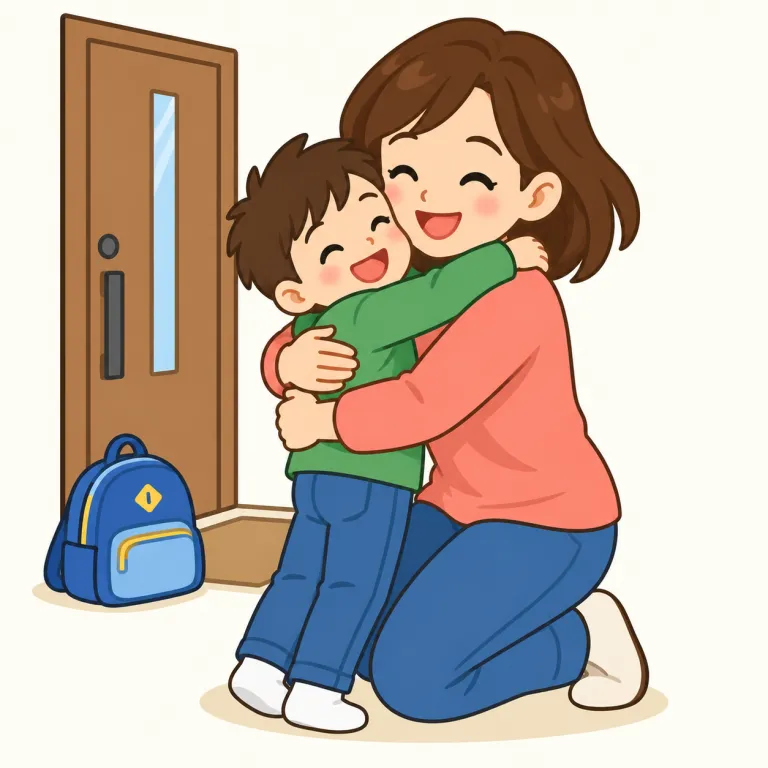
抱きしめる
解説 Definition
「抱きしめる」とは、両腕で人をしっかりと抱える行為を表す言葉です。愛情や安心感、喜びを伝えるための身体的な表現として世界中で行われます。家族や友人、恋人との再会や別れの際など、感情が高ぶる場面でよく見られる行動です。
Hugging is the act or ongoing action of holding a person, animal, or object closely with the arms, often to express affection, comfort, joy, or reassurance. It is the -ing form of the verb hug.
覚え方のコツ Memory Tip
hug「抱きしめる」の語末子音 g を重ねて -ing を付けた形が hugging。短母音の後の子音を重ねる規則で、発音は /ˈhʌɡɪŋ/。be hugging なら進行形、keep hugging なら「抱きしめ続ける」、hugging a toy では動名詞的に動作を表すと覚える。
Start with the base verb hug. Because hug ends in one consonant after a short stressed vowel, the final g is doubled before -ing: hug becomes hugging, pronounced /ˈhʌɡɪŋ/. Picture arms held closely around someone. In is hugging, the form helps build the present continuous; after keep, as in kept hugging, it describes an action that continues. It can also name the activity itself, as in hugging a stuffed animal. This links the spelling rule directly to the warm, close physical action.
例文
The mother kept hugging her child after he returned home safely.
母親は子供が無事に帰宅した後、ずっと抱きしめ続けた。
The friends greeted each other with hugging and laughter at the airport.
友人たちは空港で抱き合って笑いながら再会の挨拶を交わした。
She found comfort in hugging her favorite stuffed animal when she was sad.
彼女は悲しいとき、お気に入りのぬいぐるみを抱きしめることで慰めを見つけた。
hugging の類義語・関連語
hugging の語源・成り立ち Etymology
hugging は hug「抱きしめる」に、動作や状態を表す -ing が付いた語です。hug の語源は確定しませんが北欧語系と考えられ、hug や huggable と並べると、「ぎゅっと密着する感じ」から意味が納得できます。
Hugging is the -ing form of hug, created by doubling the final g and adding -ing. The doubling preserves the short vowel sound of hug. The deeper origin of hug is uncertain, although it may be connected with Scandinavian words expressing comfort or close holding. In modern English, the form can participate in a progressive verb phrase or function as a gerund or participial modifier.
同じレベルの語彙をもっと
外部辞書で調べる
この英単語をクイズで覚えよう