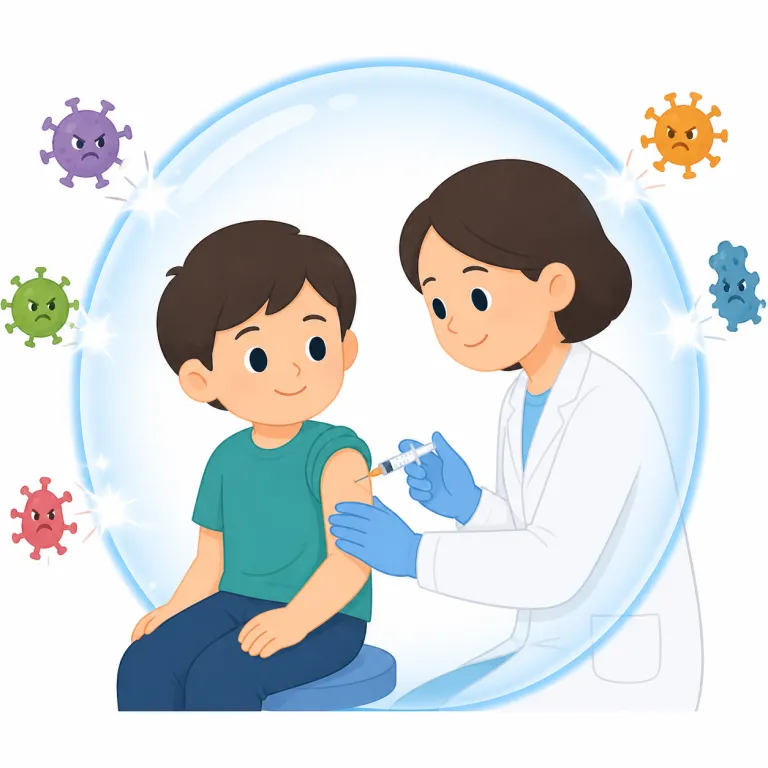
予防接種
解説 Definition
ワクチンを接種して病気に対する免疫を獲得させる医療行為。
Immunisation is the process of protecting a person or animal against a disease, usually by giving a vaccine. It is commonly used in medicine, public health, and school health records. The word can refer both to the act of vaccination and to the protection that results.
覚え方のコツ Memory Tip
まず基点は immune「免疫のある」。そこから immunity「免疫」、immunise / immunize「免疫をつける」、そして行為名が immunisation。語幹 immun- を見たら「病気をはね返す働き」の仲間だとまとめて覚えると定着しやすいです。会話では vaccination が注射そのものを指しやすい一方、immunisation は「免疫をつける処置・仕組み」まで含む少しかための語。childhood immunisation、mass immunisation programme の形で見ると使い所も覚えやすいです。
Group it with `immune`, `immunity`, and `immunize/immunise`. If you know the family, `immunisation` is easy to see as the process of giving immunity. It is often a more formal public-health word than `vaccination`, as in `childhood immunisation` or `mass immunisation programme`.
例文
Childhood immunisation programmes have drastically reduced the incidence of preventable diseases.
小児予防接種プログラムにより、予防可能な病気の発生率は大幅に減少した。
The government launched a nationwide immunisation campaign against measles.
政府は麻疹に対する全国的な予防接種キャンペーンを開始した。
Some parents have concerns about the timing and safety of immunisation schedules.
予防接種の時期や安全性について懸念を持つ親もいる。
immunisation の類義語・関連語
immunisation の語源・成り立ち Etymology
immunisation は immune に -ise と -ation が付いた語で、語源はラテン語 immunis「負担・義務を免れた」。そこから「病気を受けつけない状態にする」と発展し、immunity や immunize も同じ語根です。
Immunisation comes from immune, with the endings -ise and -ation. Immune comes from Latin immunis, meaning "free from duty" or "exempt from burden." The idea later shifted to being protected from disease, and immunisation came to mean the process of making someone resistant. Related words include immunity and immunize.
同じレベルの語彙をもっと
外部辞書で調べる
この英単語をクイズで覚えよう