
意味一覧 (2件)
面接、取材
/ verb 動詞 面接する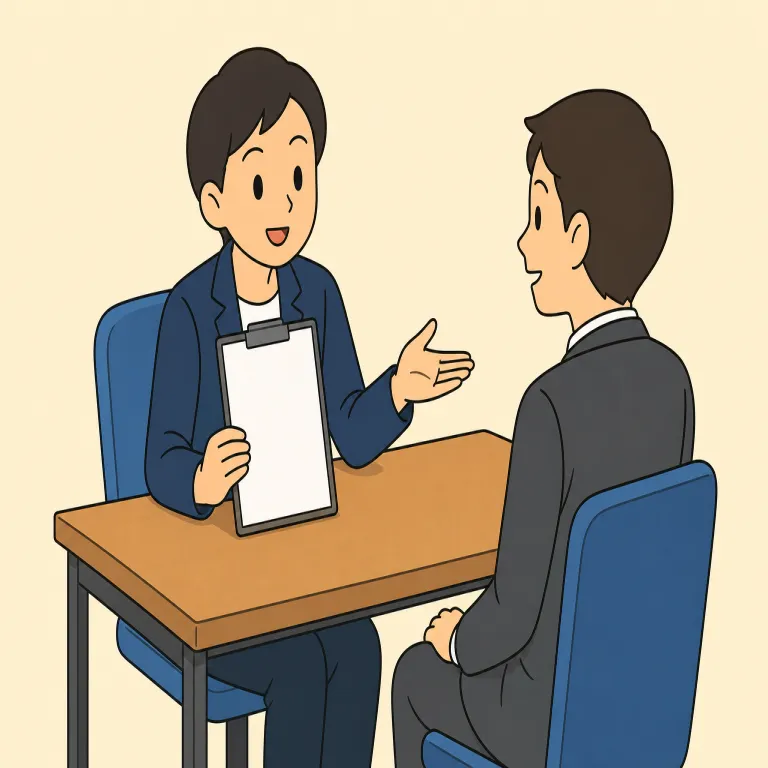
解説 Definition
人に質問して情報や意見を聞き出す場や、そのやり取り自体を指す名詞。就職の面接にも、雑誌やテレビでの取材にも使え、質問と応答が一定の目的をもって行われる点が特徴。記事や番組の一部として公開されることも多い。
A meeting or conversation in which someone asks questions for a particular purpose, such as choosing an employee or gathering information for a report. The questions and answers may also be published in an article or broadcast.
覚え方のコツ Memory Tip
まず名詞の interview「インタビュー」を知っていれば、そのまま動詞でも使えると覚えると早いです。単に chat や talk するのではなく、仕事・記事・調査のために、質問を重ねて相手から情報を引き出す少しかしこまった聞き方。question が一発の質問なら、interview はまとまった質疑応答という感覚です。interview a candidate, interview a witness が頻出。就活では have an interview は「面接を受ける」、interview someone は「その人を面接する」で主語に注意。
Picture an organized exchange in which one person asks questions and another answers. Remember "a job interview" and "a TV interview" as two settings for this noun. In "I have an interview," the word names the meeting.
例文
I have an interview today.
私は今日、面接があります。
The TV interview is in this room.
テレビの取材はこの部屋で行われます。
She asks a question in the interview.
彼女は面接で質問します。
インタビューする
(意味 2)
解説 Definition
記者や司会者などが、人に質問して話を聞くことを表す。就職試験の面接より、取材・番組・調査などで相手から情報や意見を引き出す場面でよく使う。相手を評価するより、経験や考えを聞き取って紹介することに重心がある。
To ask someone a series of questions to learn about their experiences, opinions, or knowledge for an article, program, or research project. The purpose is to gather information that can be reported or studied.
例文
I interviewed a singer at school.
私は学校で歌手にインタビューしました。
We interviewed people about the new park.
私たちは新しい公園について人々にインタビューしました。
She interviewed the doctor on TV.
彼女はテレビでその医師にインタビューしました。
えいたんごクイズでの正答率
この語をはじめて出題された 31人 のうち 30人 が正解しました(97%)。
えいたんごクイズの回答から集計した独自データです。1人につき最初に出題されたときの1回だけを数えており、復習や2回目以降の回答、「わからない」と時間切れは含みません。 集計時点は 2026年9月19日 です。
interview の類義語・関連語
interview の語源・成り立ち Etymology
interview はフランス語 entrevue の発想を英語化した語で、inter-「間で」+ view「見る」から成ります。ただ会うのでなく「向かい合って見極める」ことが面接する意味に育ち、preview や review と同じく view が核です。関連語は view, review。
It was formed on the model of French entrevue, combining inter-, meaning "between," with view, meaning "see."
同じレベルの語彙をもっと
外部辞書で調べる
この英単語をクイズで覚えよう