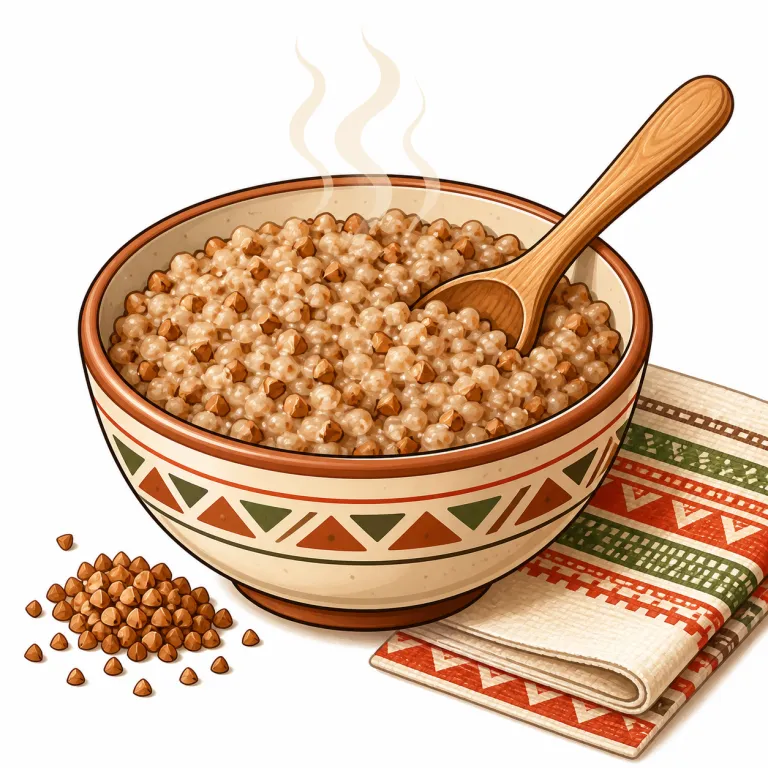
炒ったソバの実
noun 名詞特に北米英語で、殻を除いて炒ったソバの実そのものを指す。粥などに調理した料理だけでなく、調理前の食品材料として売られているものにも用いられる。
そば粒を炊いた粥またはお粥。東欧やロシア、ユダヤ料理で伝統的に食べられている穀物料理で、栄養価が高く調理が簡単です。
Kasha is a dish made from cooked grains, especially buckwheat, and it is common in Russian and Eastern European cooking. The word usually refers to a simple, warm food that may be served plain or with other ingredients. In English, it most often means buckwheat rather than any grain.
一般語として分解して覚えるより、「東欧・ロシア系の食卓に出る穀物のおかゆ系メニュー名」と丸ごと定着させるのが近道です。英語では porridge が広い言い方で、kasha はその中でも文化色のある料理名。buckwheat kasha の形で出ることが多いので、oatmeal や rice porridge の仲間に置くと整理しやすいです。cook, serve, eat kasha など料理記事や食文化の文脈で見かけやすく、素朴で温かい主食・付け合わせの場面と結びつけると残ります。
It is easier to remember `kasha` as a whole food word, not by breaking it apart. Put it in the same mental group as `porridge`, `oatmeal`, or other warm grain dishes. If you remember the common phrase `buckwheat kasha`, the word becomes much easier to fix in memory.
Kasha is a staple in Eastern European cuisine.
カーシャは東欧料理の定番です。
The kasha porridge was warm and nutritious.
カーシャのおかゆは温かく、栄養豊富でした。
Kasha recipes vary across regions.
カーシャのレシピは地域によって異なります。
文脈によって、次の意味でも使われます。
特に北米英語で、殻を除いて炒ったソバの実そのものを指す。粥などに調理した料理だけでなく、調理前の食品材料として売られているものにも用いられる。
ロシア語каша(粥)が直接の語源で、さらにスラヴ祖語 *kaša にさかのぼる。接頭辞などの分解は薄いが、チェコ語 kaše やウクライナ語 kasha も同根で、「穀物を煮たもの」という素朴な原義が料理名にそのまま残る。
Kasha comes directly from Russian kasha, meaning a porridge or grain dish, and it goes back further to Proto-Slavic *kasa or *kasa-like forms meaning cooked grain food. Related words appear in other Slavic languages, such as Ukrainian kasha and Czech kase. The meaning stayed very close to its original everyday sense of grain cooked into a soft dish.
この英単語をクイズで覚えよう