敗退させる
phrasal_verb 句動詞トーナメントや競技で相手を破り、その大会や選考から脱落させること。受け身のbe knocked out of the tournamentなどが典型的で、相手を気絶させたかどうかとは関係しない。
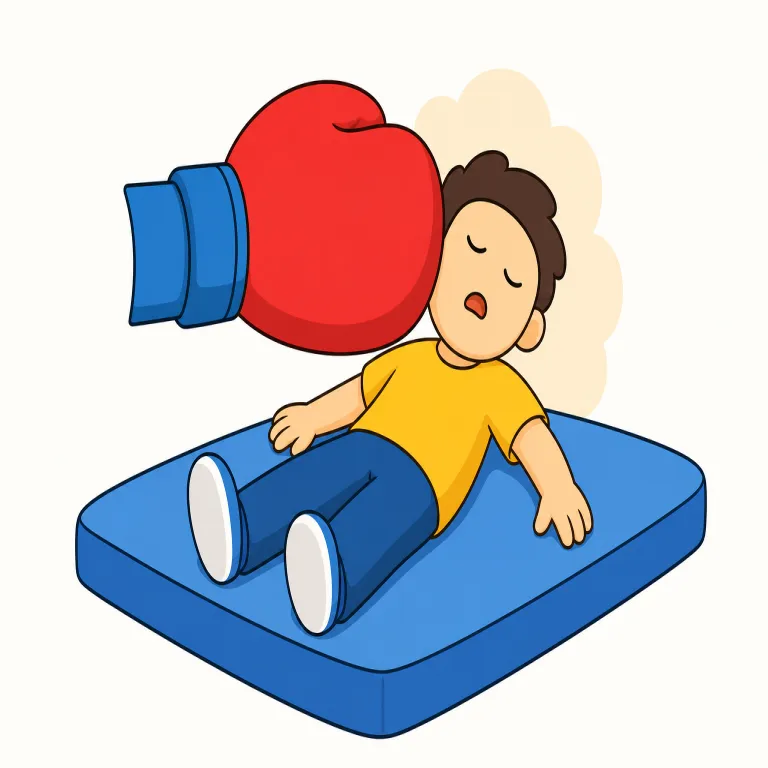
knock out はTOEIC 600レベルの英熟語で、「気絶させる、圧倒する」という意味があります。発音記号は /ˈnɑːk ˈaʊt/ です。
人を強い一撃などで気絶させることを指す句動詞。ボクシングでは相手を失神させて試合不能にする意味で使われるほか、比喩的には演技や美しさなどが人を圧倒し、すっかり魅了するという意味でも日常会話で用いられる。
To knock out can mean to hit someone so hard that they become unconscious. In informal English, it can also mean to impress someone very strongly or to defeat someone completely. The meaning depends on the situation, so context is important.
knock「たたく」と out「外へ」をそのまま重ねて、「一撃で相手を意識の外へ出す」とイメージすると覚えやすい。まずボクシングの knock out を核に置き、そのあと比喩の「圧倒する」に広げると定着しやすい。knock someone out の形で「人を気絶させる・圧倒する」が基本。be knocked out なら「気絶する/すっかり参る」。tire out は「疲れ果てさせる」だが、knock out はもっと強く、一発で効く感じ。
Start with boxing: a hard hit can `knock` someone `out`. That strong image helps you remember both the literal meaning and the wider idea of overwhelming someone. `Knock someone out` feels sudden and powerful, stronger than just making someone tired.
The boxer knocked out his opponent in the third round.
そのボクサーは3ラウンド目で相手を気絶させた。
One punch was enough to knock him out cold.
たった一発のパンチで彼は完全に気を失った。
Her performance really knocked the audience out.
彼女の演技は観客をすっかり魅了した。
文脈によって、次の意味でも使われます。
トーナメントや競技で相手を破り、その大会や選考から脱落させること。受け身のbe knocked out of the tournamentなどが典型的で、相手を気絶させたかどうかとは関係しない。
攻撃・事故・悪天候などが、設備や電力、通信網などを壊したり止めたりして機能不能にすること。knock out powerやknock a system outのように使い、一時的な停止にも完全な破壊にも用いられる。
文章・製品・楽曲などを、あまり時間をかけず手早く作り上げることを表すくだけた用法。納期が迫った仕事や、その場で簡単に仕上げる場面などで使われ、必ずしも出来が悪いという意味ではない。
knock は古英語 cnocian「たたく」、out は古英語 ut「外へ」に由来します。語源的には「一撃で外へ打ち出す」で、相手を意識や場の外に追い出す感覚が「ノックアウトする」の核です。knocker や outer も同じ要素を含みます。
`knock` comes from Old English *cnocian*, meaning "strike" or "hit," and `out` comes from Old English *ut*, meaning "outside." The basic image is hitting someone or something so hard that it is forced out. From this, `knock out` came to mean putting a person out of action or out of consciousness.
この英熟語をクイズで覚えよう