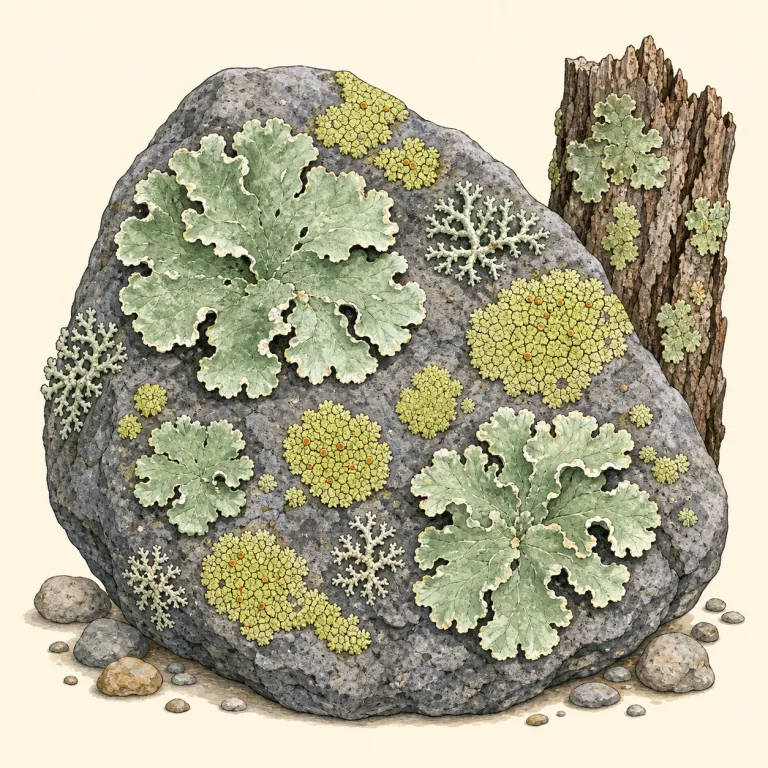
地衣類
解説 Definition
地衣類とは、菌類と藻類が共生している特殊な生物です。岩や樹皮に付着し、非常にゆっくり成長する生物で、環境汚染のバロメーター的な役割も果たします。
Lichen is a living thing that grows on rocks, trees, and other surfaces, often in dry or cold places. It looks plant-like, but it is made from a partnership between a fungus and a tiny algae or similar organism. The word is mainly used in biology and nature topics.
覚え方のコツ Memory Tip
まずは `moss`(コケ)や `fungus`(菌)と関連づけて覚えると定着しやすいです。`lichen` は見た目はコケっぽいのに、実際は fungus と alga が一緒に生きる「共生体」。つまり「コケそのもの」ではない、というズレが記憶フックになります。岩や木の表面に薄く広がる場面とセットで覚え、`grow on rocks / tree bark`、`air pollution indicator` などの文脈も添えると忘れにくいです。つづりは `kitchen` 風でも意味は自然・生物寄り、と切り分けると混乱しません。
Link `lichen` with nature words like `moss` and `fungus`, but remember it is not simply moss. That small difference is the memory hook: it looks simple on rocks or tree bark, but it is a special living partnership. Think of the common scene `lichen growing on rocks`.
例文
The rocks in the forest were covered with colorful lichen.
森の岩は、色とりどりの地衣類で覆われていました。
Lichen serves as an important indicator of air quality.
地衣類は空気の質を示す重要な指標になります。
Many animals depend on lichen as a food source during harsh winters.
多くの動物は厳しい冬の間、地衣類を食料源としています。
lichen の類義語・関連語
紛らわしい語
lichen の語源・成り立ち Etymology
lichen はギリシャ語 leichen「地衣・皮膚の斑点」に由来し、背景には leichein「なめる」があります。lick も同根で、岩や木肌をなめるように薄く広がる姿が、そのまま地衣類の名になったとわかります。
Lichen comes from Greek leichen, a word used for both lichen and skin eruptions. It is linked to a verb meaning "to lick," related to the same ancient root as English lick. The name likely came from the way lichen seems to spread thinly over rock or bark as if it were licking the surface.
同じレベルの語彙をもっと
外部辞書で調べる
この英単語をクイズで覚えよう