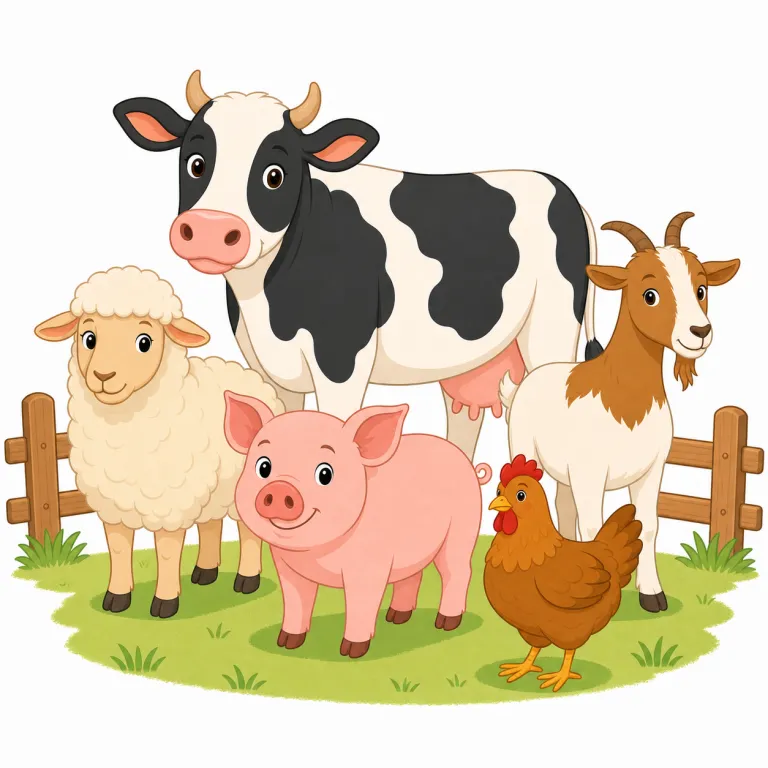
livestock
家畜
解説 Definition
家畜とは、人間が飼育する動物のことで、牛、豚、羊などが含まれます。食料や労働力を得るために飼われている動物です。
Livestock refers to farm animals such as cows, sheep, pigs, and goats that are raised for food, work, or other products. It is a collective noun, so it talks about animals as a group rather than one animal. This word is mainly used in farming and agriculture.
覚え方のコツ Memory Tip
`live` と `stock` に分けると覚えやすい語です。`stock` は「在庫・蓄え・資産」で、`livestock` は直訳すると「生きた資産」。農場で飼われ、食料や生産に結びつく動物のまとまりを指す感覚で入れると残ります。`cow, pig, sheep` などをまとめて言う語で、単なる `animal` より範囲が狭く、`pet` は含まないのがポイント。`raise livestock`, `feed livestock`, `the livestock industry` のような形で見ると定着しやすいです。
Split it into `live` + `stock`. The idea is "living stock" or animals kept as farm property, which makes the word easy to picture. Remember it with phrases like `raise livestock` and `feed livestock`, and do not mix it up with `pets`.
例文
The farmer raises livestock for income.
農家は収入のために家畜を飼育しています。
The farm needs money to care for its livestock.
農場で家畜を育てるにはお金が必要です。
Farmers here raise cattle and other livestock for food.
この地域の農家は、食料のために牛などの家畜を育てています。
livestock の類義語・関連語
対義語
livestock の語源・成り立ち Etymology
livestock は英語の live「生きた」と stock「蓄え・家財」が合わさった語で、どちらも古英語系のゲルマン語に由来します。もとは「生きている財産」、つまり動く資産としての家畜という感覚です。同系に lively, stockyard があります。
Livestock is a native English compound made from live and stock, both from Old English and older Germanic roots. Stock once meant stored property or wealth, so livestock originally meant "living property." That sense later became more specific, referring to farm animals kept as valuable assets.
同じレベルの語彙をもっと
外部辞書で調べる
この英単語をクイズで覚えよう