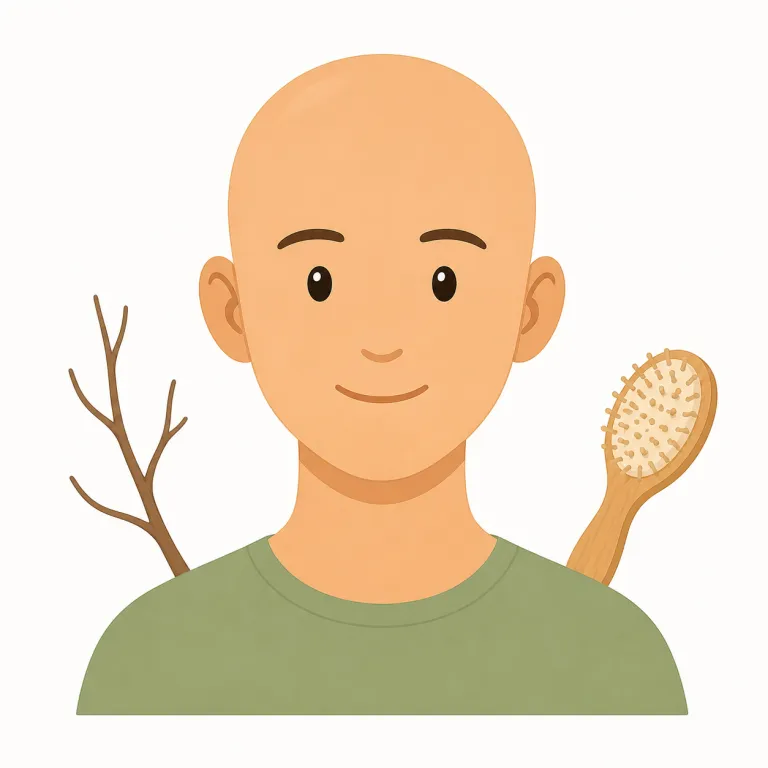
bald
bald は英検準1級レベルの英単語で、「禿げた、毛のない/露骨な、ありのままの」という意味があります。発音記号は /ˈbɔːld/ です。
禿げた、毛のない/露骨な、ありのままの
解説 Definition
主に頭髪や毛がない状態を表す形容詞で、人の頭や動物、木などにも使える。比喩的には、飾りや婉曲表現がなく、事実や意見をむき出しに示す「露骨な」「ありのままの」という意味でも用いられる。文脈によって身体的な意味か比喩的な意味かを判断する必要がある。
Bald means having little or no hair on the head, or no natural covering like fur, leaves, or feathers. It can also describe something plain, bare, or too direct. In careful use, the second meaning is more formal and depends on context.
覚え方のコツ Memory Tip
まず「本来あるはずの覆いがない状態」を核に覚えると残りやすい語です。bald head, go bald, a bald spot なら髪や毛がないこと。そこから比喩で、bald statement / bald fact は「飾り・婉曲表現・クッションがなく、そのまま出ている」発言や事実を指し、露骨な・むき出しの意になります。bare も近いですが、bald は特に“欠けていて目立つ”“言い方がむき出し”という感じが強いと押さえると使い分けしやすいです。
Think of something with its cover missing. A `bald head` has no hair, and a `bald statement` has no softening or decoration. That shared idea of "nothing covering it" helps both meanings stick.
例文
My grandfather has a bald head.
私の祖父は頭が禿げている。
She made a bald statement: 'Your plan is bad.'
彼女は「あなたの計画はだめだ」と露骨に述べた。
The bald truth is simple: we have no money.
ありのままの事実は単純だ。私たちにはお金がない。
bald の類義語・関連語
対義語
派生語
紛らわしい語
bald の語源・成り立ち Etymology
baldは中英語balledeに由来し、さらに古英語系にさかのぼると見られますが、それ以前の語源は不詳です。baldnessやbaldyも同じ語幹を持ち、短くむき出しの語形そのものが「毛がない」状態を直感的に伝えます。
Bald comes from Middle English ballede and is thought to go back to Old English, though its deeper origin is uncertain. From early on, it referred to being bare or without hair. Later forms like baldness and baldy kept the same basic word stem.
同じレベルの語彙をもっと
英検準1級の一覧へ →外部辞書で調べる
この英単語をクイズで覚えよう