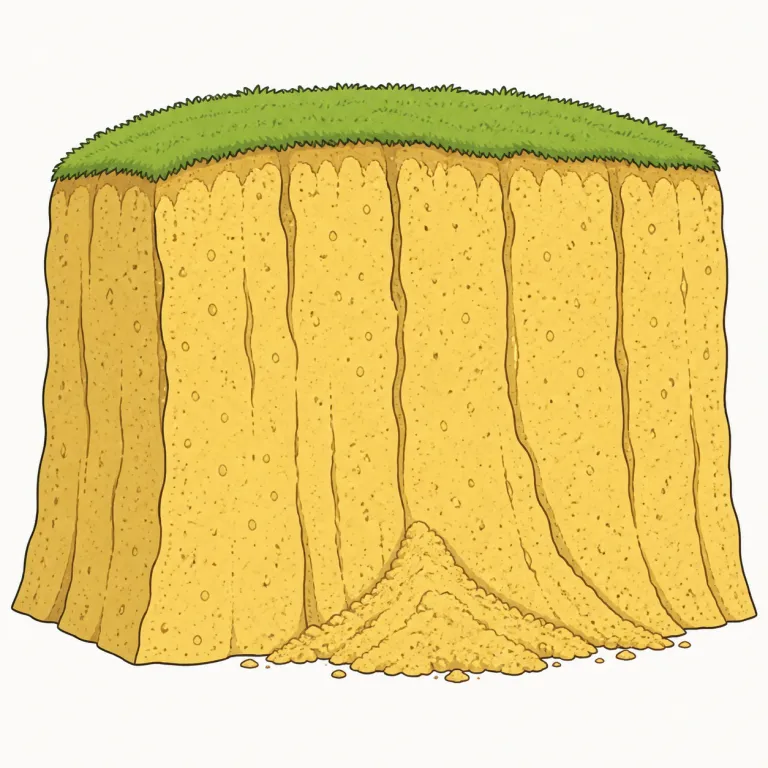
黄土
解説 Definition
風によって運ばれて堆積した細かい土壌。黄土。中国の黄土高原が有名。
Loess is a fine, soft, yellowish soil made from dust that was carried and dropped by the wind. It is common in geology and farming because it can create very fertile land.
覚え方のコツ Memory Tip
地理・地学の文脈でまとめて覚えると残りやすい語です。loess は日常の soil ではなく、loess deposits(黄土の堆積層)や the Loess Plateau(黄土高原)のように、風で運ばれた細かい土の話で出やすい専門語。sand ほど粗くなく、clay ほど粘らない、乾いて粉っぽい土のイメージで固定すると意味がぶれません。つづりは loss や loose と混同しやすいので、o-e-ss の並びをかたまりで目に焼き付けるのがコツです。
This is a geography word, so remember it with land and soil terms, not everyday vocabulary. Think of dry, dusty earth carried by wind, often in phrases like `loess deposits` or `Loess Plateau`. Be careful with the spelling: it is not `loss` or `loose`, but `loess`.
例文
The fertile loess deposits of the region have supported agriculture for thousands of years.
その地域の肥沃な黄土の堆積物は何千年もの間農業を支えてきた。
China's Loess Plateau contains some of the largest loess deposits in the world.
中国の黄土高原には、世界最大級の黄土堆積物が広がっている。
The geologist examined the loess layers to understand ancient climate patterns.
地質学者は古代の気候パターンを理解するために黄土の地層を調べた。
loess の類義語・関連語
紛らわしい語
loess の語源・成り立ち Etymology
loess はドイツ語 Löss から入った語で、さらにスイスドイツ語 lösch「ゆるい・砕けやすい」にさかのぼります。語源どおり、風で運ばれるほど細かくほぐれた土を指し、英語 loose や lose と同系だと思うと、黄土の軽さが語に残っていると見えてきます。
Loess came into English from German Löss, probably from Swiss German lösch, meaning something like "loose" or "crumbly." The word’s history reflects the idea of soil that is so fine and light that it can be carried by wind. It is likely related to English loose and lose, which share the sense of not being firmly fixed together.
同じレベルの語彙をもっと
外部辞書で調べる
この英単語をクイズで覚えよう