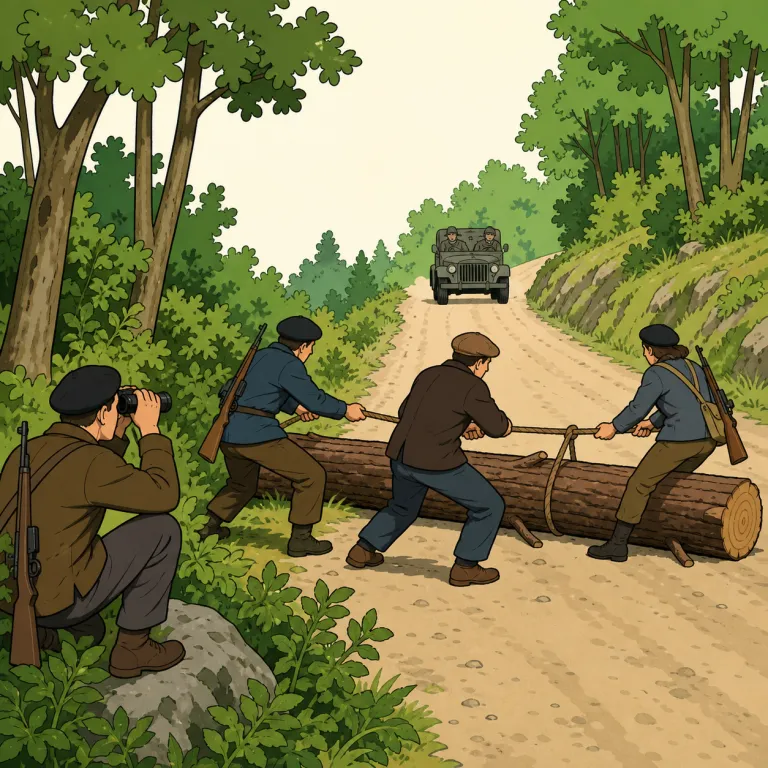
マキ、地中海性低木林
noun 名詞地中海沿岸に広がる、常緑の低木が密生した植生やその藪を指す。乾燥した夏に適応した植物群からなり、地理、生態学、景観の説明で用いられる語である。
第二次世界大戦中のフランスにおける対ドイツ抵抗運動、またはその組織の名称。
Maquis refers to a resistance group that fought secretly against enemy control, especially in France during World War II. The word is mainly used in historical and political contexts.
超頻出語ではないので、単独で覚えるより「第二次大戦のフランスで、占領下に潜伏して戦う地下抵抗組織」という場面ごと一塊で覚えると残りやすいです。文脈はかなり固定されていて、the Maquis / French maquis と出たらまず French Resistance を連想すると意味に届きやすいです。resistance が運動全体を広く指せるのに対し、maquis は現地で隠れて活動する武装ゲリラ部隊寄り。つづりは marquis と見間違えやすいので、そこを分けて記憶するのがコツです。
Remember this word as a fixed history scene: the French Resistance in World War II. `The Maquis` often points to hidden local fighters, not the whole resistance movement in general. It is easy to confuse with `marquis`, so keep those two spellings separate in your memory.
The maquis fighters sabotaged German supply lines throughout occupied France.
マキの戦士たちは占領下のフランス全土でドイツ軍の補給線を破壊した。
Many young men fled to the mountains to join the maquis during the war.
戦時中、多くの若者がマキに加わるために山へ逃れた。
The museum exhibit honored the bravery of the maquis.
博物館の展示はマキの勇敢さを称えるものだった。
文脈によって、次の意味でも使われます。
地中海沿岸に広がる、常緑の低木が密生した植生やその藪を指す。乾燥した夏に適応した植物群からなり、地理、生態学、景観の説明で用いられる語である。
maquis はフランス語で元は「地中海沿岸の低木林・藪地」を指し、コルシカ語・イタリア語 macchia、さらにラテン語 macula「しみ・斑点」に連なります。第二次大戦期、そうした藪に潜んだ抵抗運動勢力を指す語となり、immaculate と同根の「斑点」の発想が地形名に転じた語です。
Maquis came into English from French, where it first meant Mediterranean scrubland or thick bush. The French word is related to Corsican and Italian macchia, and goes back to Latin macula, meaning "spot" or "stain." During World War II, the name shifted from the kind of rough land to resistance fighters who hid there.
この英単語をクイズで覚えよう