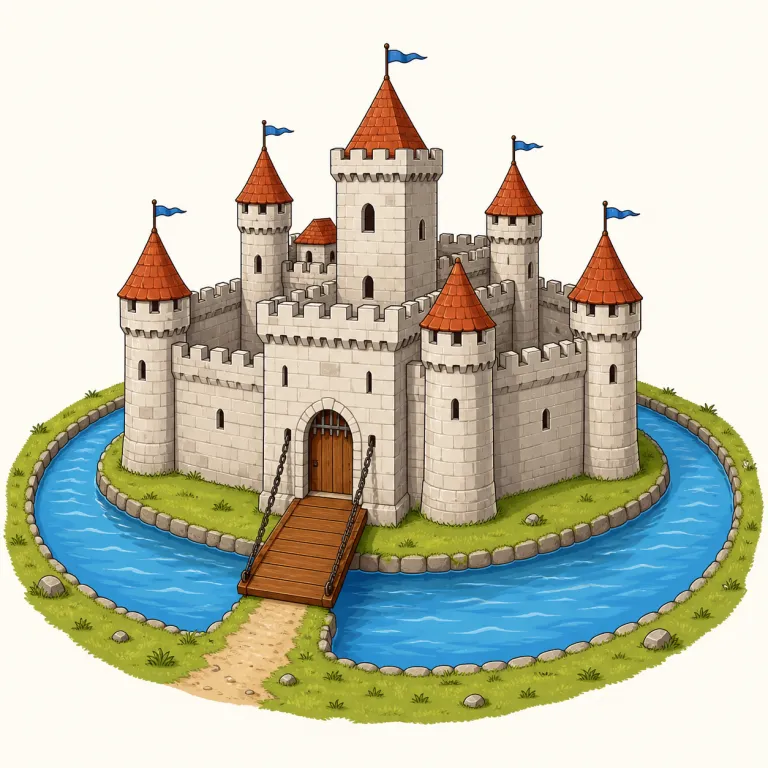
堀
解説 Definition
城や砦の周りを囲むために掘られた溝。通常は水で満たされており、防御の役割を果たす。
A moat is a deep, wide ditch, often filled with water, that surrounds a castle or other important building. It was traditionally used for protection against enemies. In modern business writing, it can also mean a strong advantage that protects a company from competitors.
覚え方のコツ Memory Tip
moat は「城を守るため、建物の周囲をぐるっと囲む水のある溝」という場面ごと覚えると強いです。単なる ditch(溝)や trench(塹壕)より、防御施設らしさがはっきりある語。歴史物では castle moat, cross the moat, a moat around the fortress などでよく出ます。bridge や drawbridge が近くに来たら、門の前の跳ね橋の下にある水路を思い出すと定着しやすい。短い語なので、boat が浮かびそうな場所という視覚イメージで固定すると trench との混同も減ります。
Picture a castle with water all around it. A `moat` is not just any ditch; it belongs to a fortress, often with a bridge or drawbridge above it. Think: if a `boat` could float around the castle, that water ring is probably the moat.
例文
The castle was surrounded by a deep moat filled with water.
その城は水で満たされた深い堀に囲まれていた。
The ancient fortress had a moat to protect against invaders.
その古い要塞には、侵略者から守るための堀があった。
Crossing the moat was dangerous without a bridge.
橋がないと堀を渡ることは危険だった。
moat の類義語・関連語
moat の語源・成り立ち Etymology
moatは古フランス語moteに由来し、さらに俗ラテン語motta「土の盛り上がり・土塁」にさかのぼる。城では土塁と堀が対になっていたため、語が防御施設全体から「堀」を指すようになった。関連語にmotte、motte-and-baileyがある。
Moat comes from Old French mote, and earlier from Vulgar Latin motta, meaning a mound of earth or embankment. In medieval castles, the earth mound and the defensive ditch were closely linked, so the word shifted from the whole fortification area to the ditch itself. It is related to motte, as in motte-and-bailey.
同じレベルの英単語をもっと
英検1級の一覧へ →外部辞書で調べる
この単語を英単語クイズで覚えよう