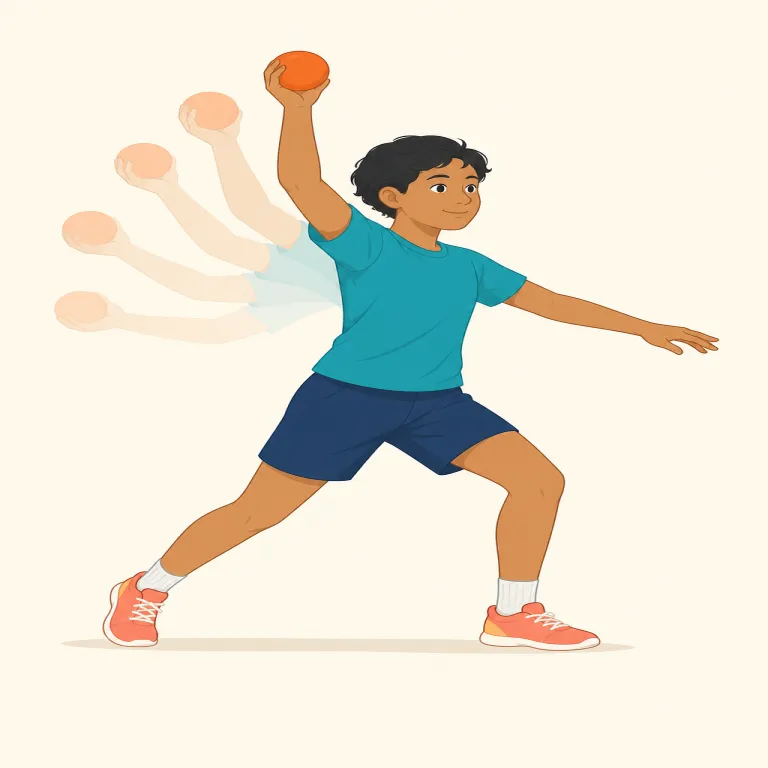
順手の、回内握りの
adjective 形容詞バーなどを前腕を回内させた順手で握る方法を表す。手のひらの具体的な向きは腕やバーの位置により異なり、懸垂では通常、自分と反対側を向く。overhand grip の形でよく使われ、頭上から投げる動作とは異なる。
主にスポーツで、腕を肩や頭より高く上げ、上から振り下ろすように行う投球やサーブの形を表す形容詞。文脈によっては knot のように、ひと結びにした基本的な結び目を指すこともあり、使われる分野で意味を判断する必要がある。
Overhand describes a movement made with the hand or arm coming from above the shoulder or from the top down. It is often used in sports, throwing, sewing, and knot-tying. The exact meaning changes with the activity, but it generally refers to a downward or above-position action.
over + hand で「手が上を通る」と置くと覚えやすい語。スポーツでは underhand(下手投げ)と対比すると定着しやすく、overhand throw / pitch / serve は腕を肩や頭より高く上げて、上から振り下ろす動き。overhead にも近いが、こちらは「頭上」そのものより「手の出し方」に意識がある。さらに overhand knot で「基本のひと結び」も表すので、投球専用語だと思い込まないのがコツ。
Break it into `over + hand`: the hand goes over. In sports, this helps you remember the contrast with `underhand`, as in an `overhand throw` or `overhand serve`. Also note `overhand knot`, so do not limit the word to throwing only.
The pitcher threw a powerful overhand fastball that struck out the batter.
投手は力強いオーバーハンドの速球を投げ、打者を三振に仕留めた。
She used an overhand serve to start the volleyball match.
彼女はオーバーハンドのサーブでバレーボールの試合を始めた。
Learning the overhand knot is one of the first steps in basic knot-tying.
ひと結びは、基本的なロープワークで最初に覚える結び方の一つだ。
文脈によって、次の意味でも使われます。
バーなどを前腕を回内させた順手で握る方法を表す。手のひらの具体的な向きは腕やバーの位置により異なり、懸垂では通常、自分と反対側を向く。overhand grip の形でよく使われ、頭上から投げる動作とは異なる。
overhand は over「上を越えて」と hand「手」から成る英語本来の複合語で、どちらも古英語にさかのぼります。手が肩より上を通る投げ方をそのまま表した語で、overhead や underhand と並べると、「上から手を出す感じ」が意味に直結しているとわかります。
Overhand is a native English compound from over and hand, both going back to Old English. The word was formed in a very direct way to describe a movement where the hand passes above something or comes from above. Its meaning stayed close to that physical image. Related compounds include overhead and underhand.
この英単語をクイズで覚えよう