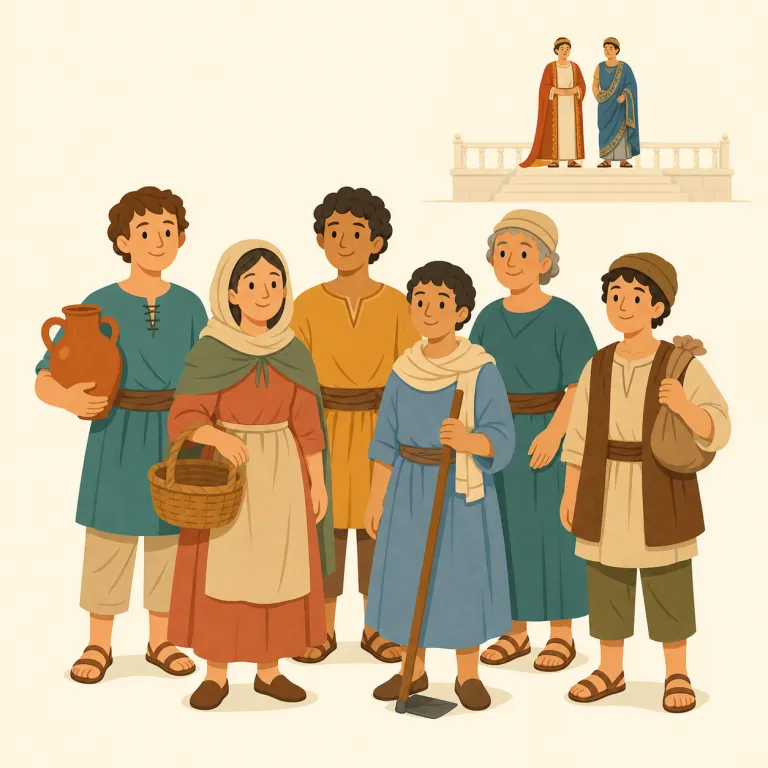
平民
解説 Definition
古代ローマにおいて、貴族ではない一般市民。現在では、普通の人々や庶民を指すことがある。
Plebs is an informal and often disrespectful word for ordinary people or people seen as lower in status. It comes from the idea of common people in ancient Rome, so it can sound humorous, rude, or class-conscious depending on the context.
覚え方のコツ Memory Tip
まず対比で覚えると定着しやすい語です。古代ローマでは patrician が「貴族」、それに対する plebs が「一般市民・平民」。つまり『上流ではない側の人々』という位置づけで押さえるとよいです。関連語の plebeian も同じ系列なのでセットで覚えると記憶が強まります。語尾の -s は複数形で、群衆・大衆としてまとまって現れやすい点もヒント。現代ではやや見下した響きで「庶民ども」のように使われることがあるので、単なる neutral な “people” とは違うニュアンスに注意。
Remember it by contrast: patricians were the upper class in ancient Rome, and plebs were the ordinary people. The related word plebeian can help fix the same family in your mind. Also notice the final -s: it often appears as a group word, not just one person.
例文
The plebs had limited political power in ancient Rome.
古代ローマでは、平民の政治的な力は限られていた。
The distinction between patricians and plebs was significant in Roman society.
貴族と平民の区別はローマ社会で重要だった。
Eventually, the plebs gained more rights and representation.
やがて、平民はより多くの権利と代表権を得た。
plebs の類義語・関連語
類義語
派生語
plebs の語源・成り立ち Etymology
ラテン語plebs/plebes「平民・大衆」から来た語で、さらに印欧祖語の「満たす」にさかのぼるとされます。「人でいっぱいの集団」という感覚から「一般民衆」になった語です。関連語はplebeian, plebiscite。
"Plebs" comes from Latin "plebs" or "plebes," meaning "the common people" or "the masses." It is often linked to an older Indo-European root meaning "to fill," suggesting the idea of a crowd or a group full of people. From that, the word came to mean ordinary people as opposed to the elite. Related English words include "plebeian" and "plebiscite."
同じレベルの語彙をもっと
外部辞書で調べる
この英単語をクイズで覚えよう